CNC milling · Binh Duong, Vietnam
Datums and bores, cut to GD&T on our own castings.
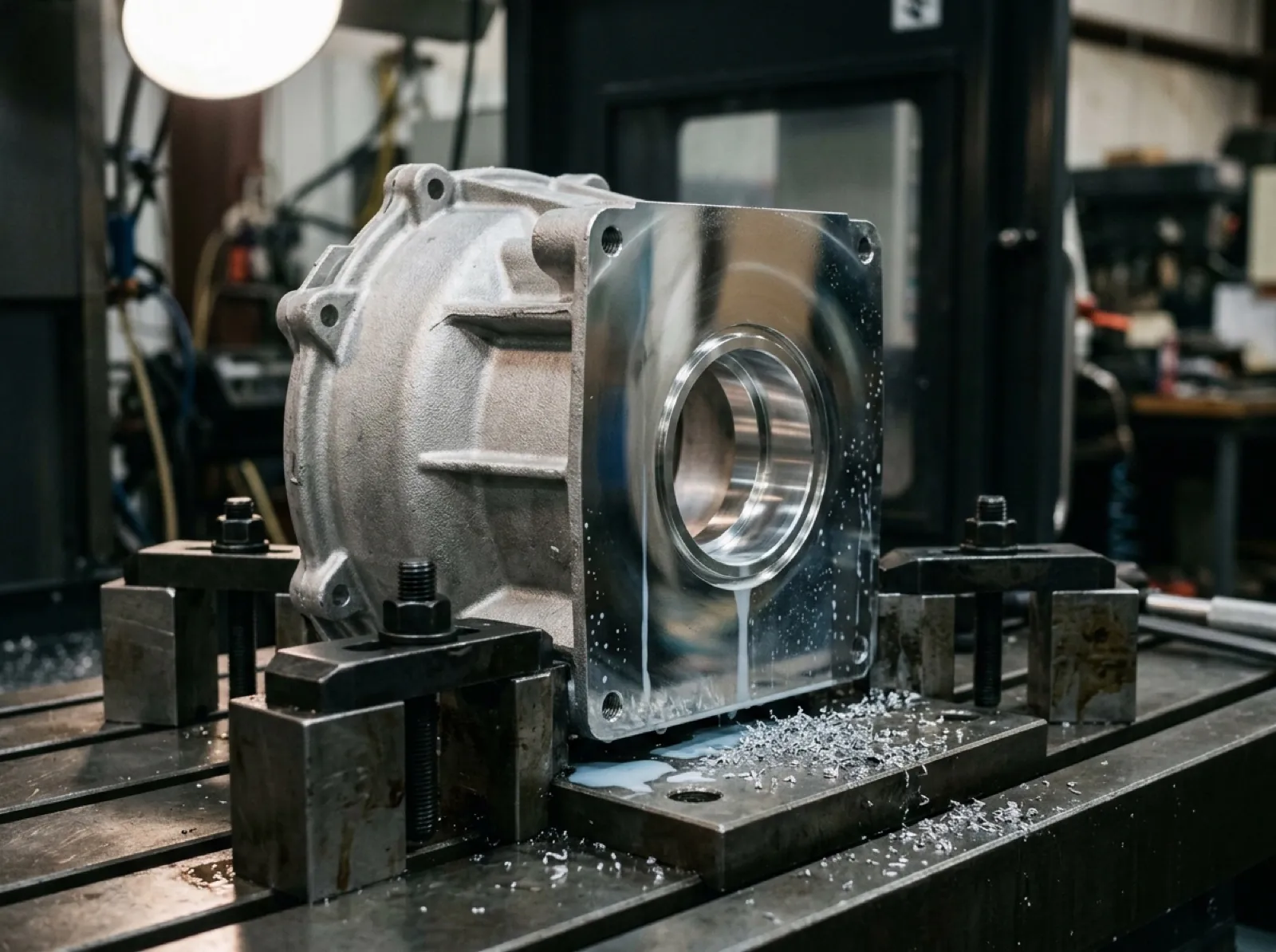
CNC milling here is a second step, not a standalone job shop: it is what turns a raw casting into a part that actually fits its mating hardware. Datum faces, bores, pockets and tapped holes, held to the concentricity you called out.
- Inches
- ±.001
- Bore tolerance on machined castings
- Inches
- Ø.003
- GD&T concentricity we hold
- RMS
- 125
- Standard as-machined finish
- Hours
- 48
- Quote returned from your drawing
01 — What we actually run
The step between "cast" and "fits."
Almost every milling job we run starts as one of our own castings. That is a deliberate choice: we are strongest as the second operation in a routing, not as a general billet-machining shop taking in blanks from elsewhere.
Typical work
Datum faces machined flat for downstream assembly, bores bored and reamed to print, tapped holes and ANPT/NPT threads to ANSI/ASME B1.20.1, pockets and mounting features cut into ADC12 aluminum or Zamak 3 zinc castings, and machined bores on sand-cast brass and bronze valve bodies.
We hold concentricity because most of what we machine mates with a turned or pressed part downstream — a bushing, a shaft, a seal — and a bore that is round but off-center fails an assembly just as badly as one that is out of round.
02 — Process parameters
What we hold, and on what.
If your GD&T call-out is tighter than this table, say so before tooling — not after first samples.
| Parameter | Specification |
|---|---|
| Machined bore tolerance | ±0.001 in. (0.025 mm) |
| GD&T concentricity | To Ø0.003 in |
| Surface finish, as-machined | 125 RMS |
| Thread standard | ANPT and NPT to ANSI/ASME B1.20.1, tapped holes |
| Substrate materials machined | ADC12 aluminum die castings · Zamak 3 zinc die castings · sand-cast brass and bronze |
| Not offered | Simultaneous five-axis machining |
03 — Take cost out of the drawing
Where secondary-machining cost actually comes from.
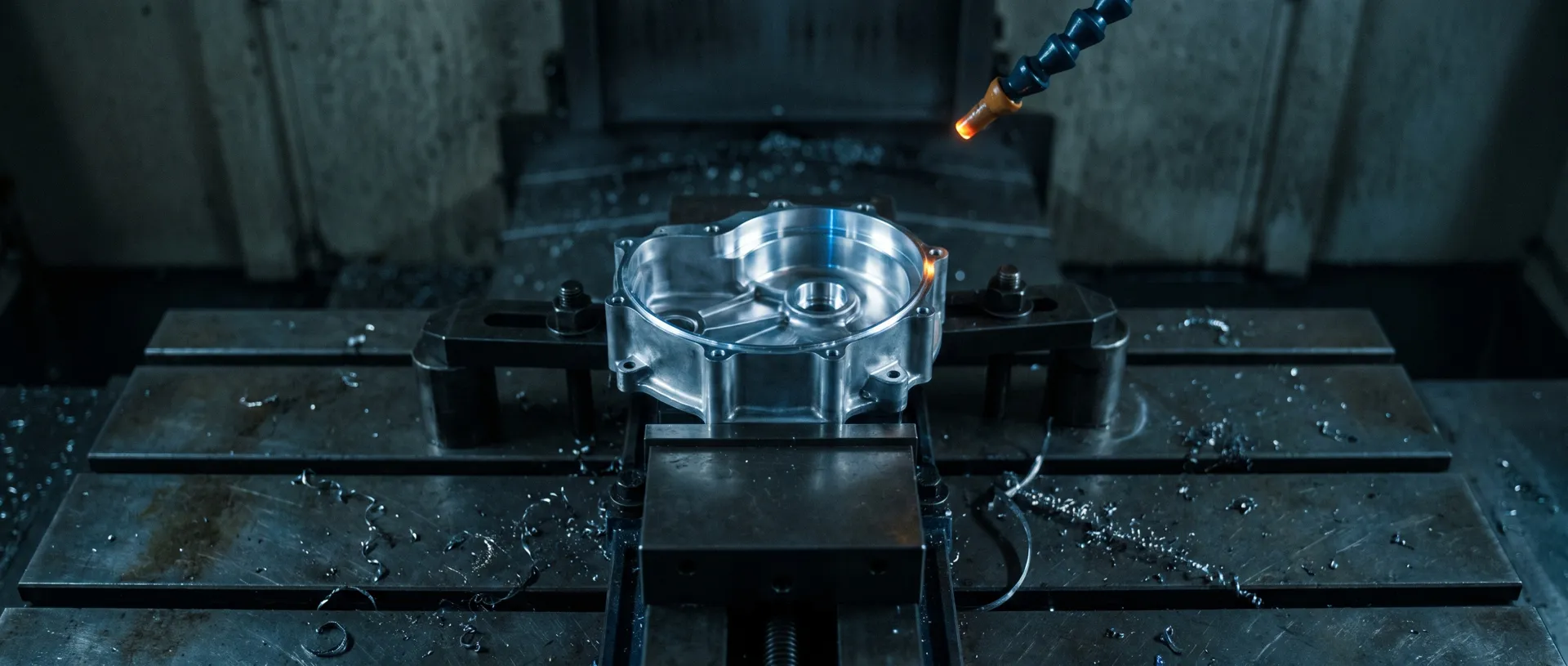
Machining a casting well is mostly about not fighting the casting. These are the drawing choices that keep cycle time down.
1. Pick one datum scheme and use it on both drawings
If the casting drawing and the machining drawing reference different datums, we have to build a second fixture just to reconcile them. One consistent datum scheme keeps it to one setup.
2. Reserve Ø0.003 in concentricity for fits that need it
Every GD&T call-out gets measured and logged. Apply the tight concentricity spec only where a bearing, bushing or shaft actually seats — a decorative bore does not need it.
3. Size bores to standard reamer and boring-bar diameters
An odd bore diameter that falls between standard tooling sizes forces a custom tool or a slower interpolated cut. Round to a standard size where the fit tolerance allows it.
4. Keep deep, tight-tolerance holes away from thin cast walls
Core shift during casting means a deep hole positioned near a thin wall can wander off true more than the wall thickness suggests. Position tight-tolerance features in the thicker sections of the casting.
5. Leave non-mating cast surfaces as-cast
A surface finish call-out on a face nobody touches just adds a machining pass for no functional reason. Call out 125 RMS only where a gasket, seal or bearing actually lands.
04 — Where this is the wrong process
What CNC milling does not do here.
Not a general billet-machining job shop
We are set up to machine our own castings efficiently, not to run large monolithic parts cut entirely from billet. If your part has no casting or forging step, a dedicated machining house is likely a better fit than we are.
We do not offer simultaneous five-axis work, on this process or any other. If your part needs it, we will tell you on the first call rather than after tooling.
05 — One supplier, one line
Milling is the hinge between casting and finishing.
Almost nothing we machine leaves our floor unfinished — it goes straight from the mill to plating or coating.
Die casting
ADC12 aluminum and Zamak 3 zinc housings, cast and then machined to print on the same site.
See die castingSand casting
Brass and bronze valve bodies, sand cast and then bored and faced to print.
See sand castingSurface finishing
A machined casting goes straight to plating, coating or pad printing before it is packed.
See the finish menu
Do you offer five-axis machining?
No. If your part needs simultaneous five-axis motion, we are the wrong shop and would rather tell you now than after a deposit.
What is the tightest tolerance you can hold on a bore?
±0.001 in. (0.025 mm) on diameter, with GD&T concentricity to Ø0.003 in against a stated datum. If your print calls for tighter than that, tell us before tooling so we can be honest about whether we can hold it.
Can you machine a casting we already tool elsewhere?
Usually, yes, if the incoming casting passes our inspection for wall thickness and porosity. Send the drawing and a sample and we will quote the machining step on its own.
Send a machining drawing. See what comes back.
STEP or PDF. You get a unit price at your volume, the lead time, and a short note on anything in the GD&T we would change to take cost out.