
MIM & powder metallurgy · Partner plant we manage
Metal injection molding and powder metallurgy in Vietnam, from a partner plant we manage.
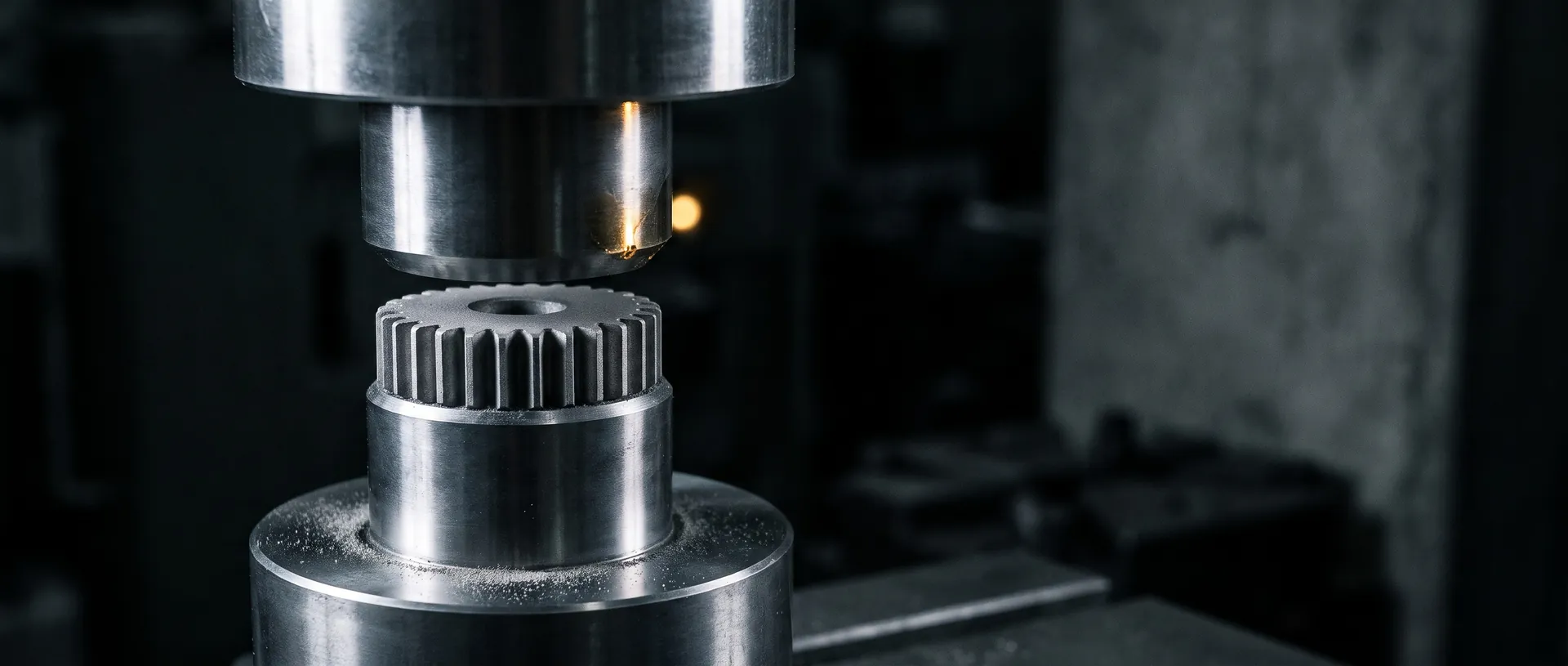
Saola Manufacturing places small, complex steel and stainless parts with a metal injection molding (MIM) and powder metallurgy (PM) plant it manages in southern Vietnam. Faces and threads that need machined tolerances are finished by CNC, and the whole part ships under one PO. The quote names the production site and the country of origin.
- Processes
- 2
- MIM for small 3D shapes, PM for gears, cams and bushings
- MIM part weight
- 0.1–60 g
- The range where MIM usually beats machining
- PM part weight
- 2–500 g
- Pressed and sintered, 2D profile with steps
- Hours
- 48
- First answer on your drawing: MIM, PM or keep it on CNC
01 — What we place here
Small, complex, high-volume parts that take too many CNC operations.
MIM and PM form the shape in a tool, so the cost is in the tooling and the payback is in volume. The parts that gain most are small, have features that need several CNC setups (cross holes, internal corners, rings of holes, odd profiles), and run in steady volume year after year.
Typical parts
Plumbing and sanitary: 304 and 316L stainless inserts for PPR fittings, cartridge spindles, aerator housings, hose nuts and smart-toilet nozzles. Stainless contains no lead and needs no plating, which matters for parts in contact with drinking water. Read what NSF/ANSI 61 and 372 ask of lead-free parts and why brass dezincifies.
Liquid-cooling connectors: latches, elbows with internal flow paths, ball cages and poppets for quick-disconnect couplings, in 17-4PH, 304 or 316L. Sealing faces and key diameters are finish-turned after sintering; bodies and thin-wall sleeves usually stay on CNC.
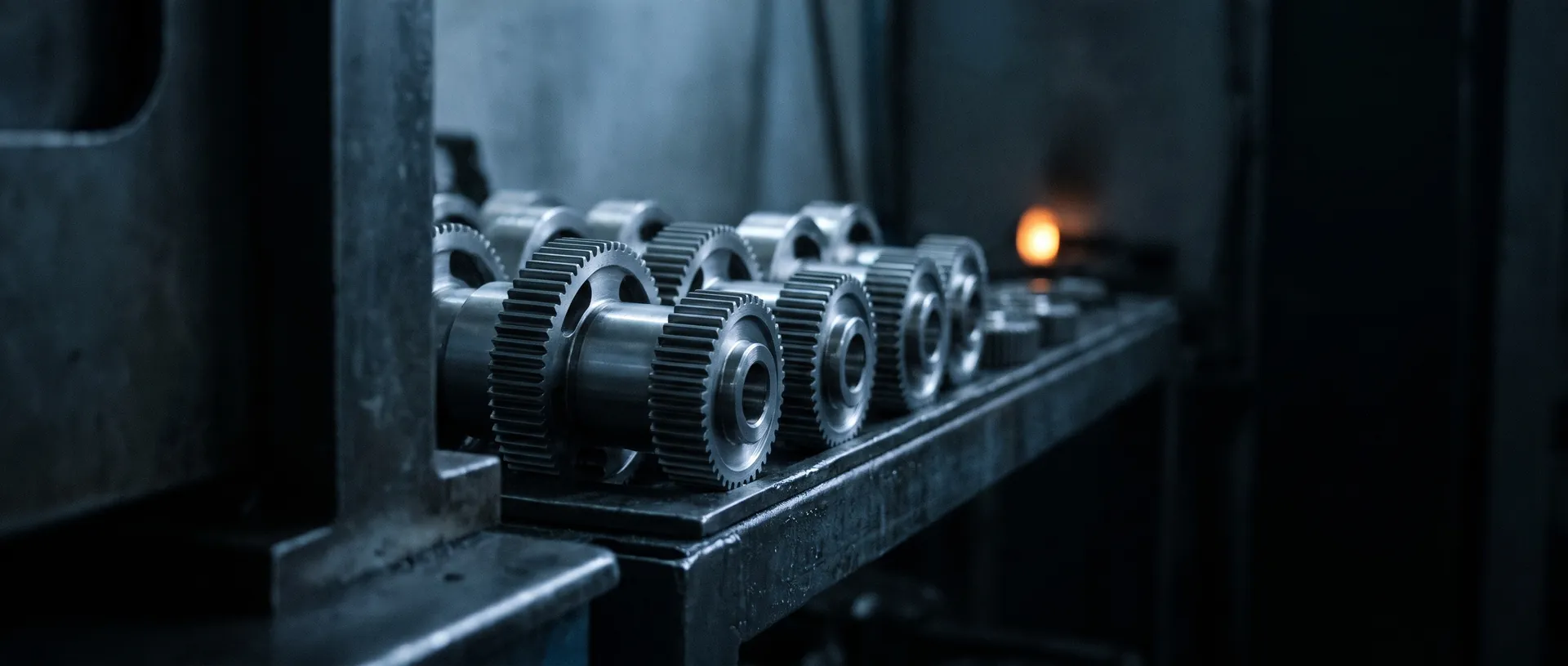
E-bikes and power tools: PM sun, planet and ring gears and planet carriers for motor reduction stages; MIM pawls, ratchets, brake and shifter pivots and lock cams; oil-impregnated sintered bushings.
Choosing a stainless grade? Compare 316 and 316L and 17-4PH H900 and H1150.
02 — Process parameters
Materials, sizes, tooling and terms.
The numbers a buyer needs before a first RFQ. Anything not listed here is set per part in the written quote.
| Parameter | Specification |
|---|---|
| MIM materials | 304, 316L and 17-4PH stainless; 4605 low-alloy steel |
| PM materials | Fe-Cu-C, sinter-hardened Fe-Ni-Mo, oil-impregnated Fe-Cu bearing grades |
| Part size | MIM about 0.1–60 g; PM about 2–500 g |
| Secondary operations | Sizing, oil impregnation, steam treatment, CNC finishing of sealing faces, bores and threads |
| Volume | Pays back at high volume per part number; below a few thousand pieces a year CNC is usually cheaper, and we will say so |
| Tooling | Dedicated mold or die per part; cost, build site and ownership set in the written quote |
| Where each step is done | Molding or pressing and sintering at a partner plant in Vietnam · finishing as named in the quote, together with the country of origin |
| Terms | FOB Ho Chi Minh City · tooling and payment terms confirmed in the written quote |
03 — Which parts should move
How we decide MIM, PM or CNC for each part.
Send the drawings of an assembly and we go part by part. Usually some parts should move and some should stay where they are; we would rather tell you that up front than sell a tool that never pays back.
1. MIM for small 3D shapes with many setups
A latch, a pawl or an elbow with an internal corner can take four or five CNC operations. MIM forms those features in one shot, and only the faces that need machined tolerances are finished afterwards.
2. PM for 2D profiles: gears, cams, carriers, bushings
Pressing works in one direction, so PM suits parts whose shape is a profile with steps: spur gears, planet carriers, cams and self-lubricating bushings. Undercuts and cross holes are machined afterwards or point to MIM.
3. Keep heavy, simple or low-volume parts on CNC
Bodies, thin-wall sleeves, plain turned parts and anything that runs a few thousand pieces a year are usually cheaper turned from bar. Faces held tighter than about ±0.02 mm are machined either way.
4. Allow for sintering shrinkage on the drawing
MIM parts shrink by roughly 15–20% in sintering. Even wall thickness, generous radii and a flat face to sit on during sintering keep distortion and scrap down; datum faces that must be exact are best drawn as machined faces.
04 — Where this is the wrong process
What MIM and PM do not do here.
Not for prototypes, one-off runs or large parts
Both processes need a dedicated tool, so a first sample takes tool-building time and the tooling only pays back over real volume. For prototypes and pilot lots we machine the same part at our lead CNC plant first. See CNC turning and CNC milling.
Faucet bodies and other parts above a few hundred grams are better cast or forged. For brass and bronze bodies see sand casting.
Tooling may be built outside Vietnam, and powder and feedstock are imported. The quote states where the part is made and the country of origin we can document for it; see tariffs and country of origin.
05 — One supplier, one PO
A sintered part often needs one more operation.
Sealing faces, threads and bearing bores are finished after sintering, and some assemblies mix MIM parts with turned ones. We manage all of it under one part number and one invoice.
CNC turning
Sealing faces and threads finish-turned on MIM parts, and the turned bodies they fit into.
See CNC turningSurface finishing
Passivation, plating or coating at a partner finishing plant before the part ships.
See the finish menuCNC milling
Flats, cross holes and datum faces cut into a sintered part where the tool cannot form them.
See CNC millingWhat should I send to find out whether a part suits MIM or PM?
The drawing or STEP file, the material, the annual volume per part number and the process you use today. We answer per part: move to MIM, move to PM, or keep it where it is, with the tooling cost and unit price for the ones that should move.
Who owns the tooling?
Tooling cost, where the tool is built and who owns it are confirmed in the written quote, together with the payment terms. If you need a specific ownership arrangement, say so on your RFQ.
Are the parts Vietnamese origin?
The parts are molded or pressed and sintered in Vietnam, but powder and feedstock are imported and tooling may be built abroad. Each quote states the production site and the country of origin we can document for that part. We do not promise an origin before the part and its materials are confirmed.
Send the drawings. We will tell you which parts should move.
STEP or PDF with annual volumes. You get a part-by-part answer, the tooling cost and unit price for the parts that suit MIM or PM, and a straight answer on the ones that should stay on CNC.