Die casting · Binh Duong, Vietnam
Aluminum and zinc die casting, on tooling we own.
ADC12 aluminum and Zamak 3 zinc, cast in tooling we design, cut and maintain for the life of the part. The casting leaves our own floor still on our own floor — machined, finished and packed under one PO.
- Alloys
- 2
- ADC12 aluminum and Zamak 3 zinc, no others
- Dollars
- 950–12.8K
- Tooling investment range
- Pieces
- 5K
- MOQ starting point
- Hours
- 48
- Quote returned from your drawing
01 — What we actually run
Housings, bases, covers — parts that get machined after.
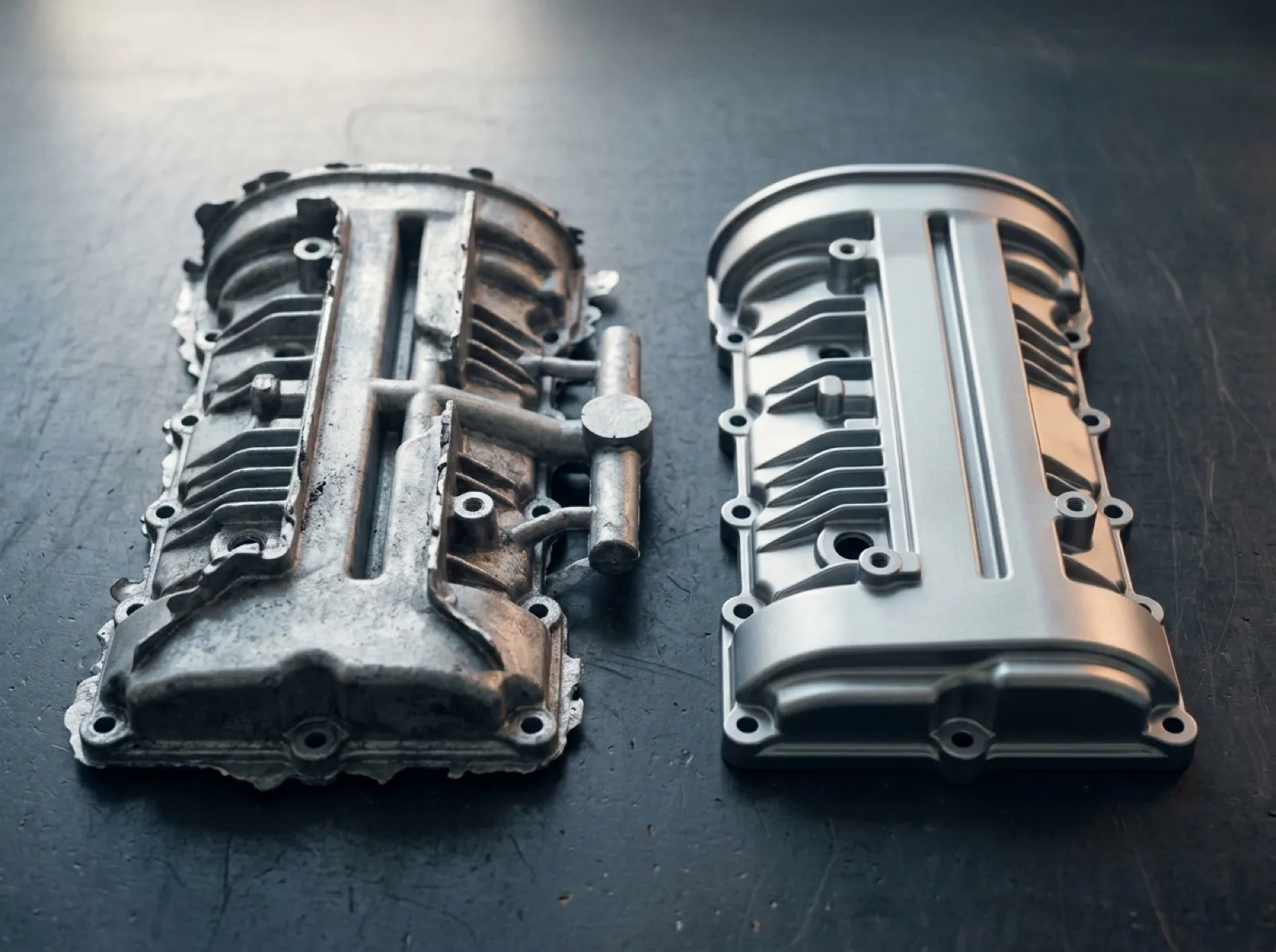
Our die-cast work is small to mid-size structural and enclosure parts: the kind that gets a bore, a thread or a datum face cut in after casting. If a part is purely decorative or paper-thin, it is usually a better fit for a managed partner process than for our tooling.
Typical parts
Housings, bases, covers and lamp heads for equipment cabinetry — parts that carry a machined bore or a mounting face on an otherwise cast body.
ADC12 aluminum is our default where weight and corrosion resistance matter and the part will be anodized or powder coated. Zamak 3 zinc is the better call where wall sections are thinner and the as-cast dimensional stability needs to be tighter — zinc alloys hold detail and flatness better at low wall thickness than aluminum alloys generally do.
02 — Process parameters
Alloys, tooling and terms.
The numbers a buyer actually needs before a first RFQ.
| Parameter | Specification |
|---|---|
| Alloys | ADC12 aluminum, Zamak 3 zinc |
| Tooling investment | US$950–12,800, depending on part size and cavitation |
| Minimum order quantity | From 5,000 pieces |
| Machined bore tolerance, post-cast | ±0.001 in. (0.025 mm), GD&T concentricity to Ø0.003 in |
| Standard finishes applied | Powder coating, electroplating, zinc plating, RoHS-compliant blue trivalent chromate, anodizing on aluminum, pad printing |
| Terms | FOB Ho Chi Minh City or DDP · tooling 50% up front, 50% on sample approval |
03 — Take cost out of the drawing
Where die-casting cost actually comes from.
Die-cast cost is set mostly at the tooling stage. These are the drawing choices that move tooling price, cycle time and scrap rate.
1. Add draft to every wall that leaves the tool
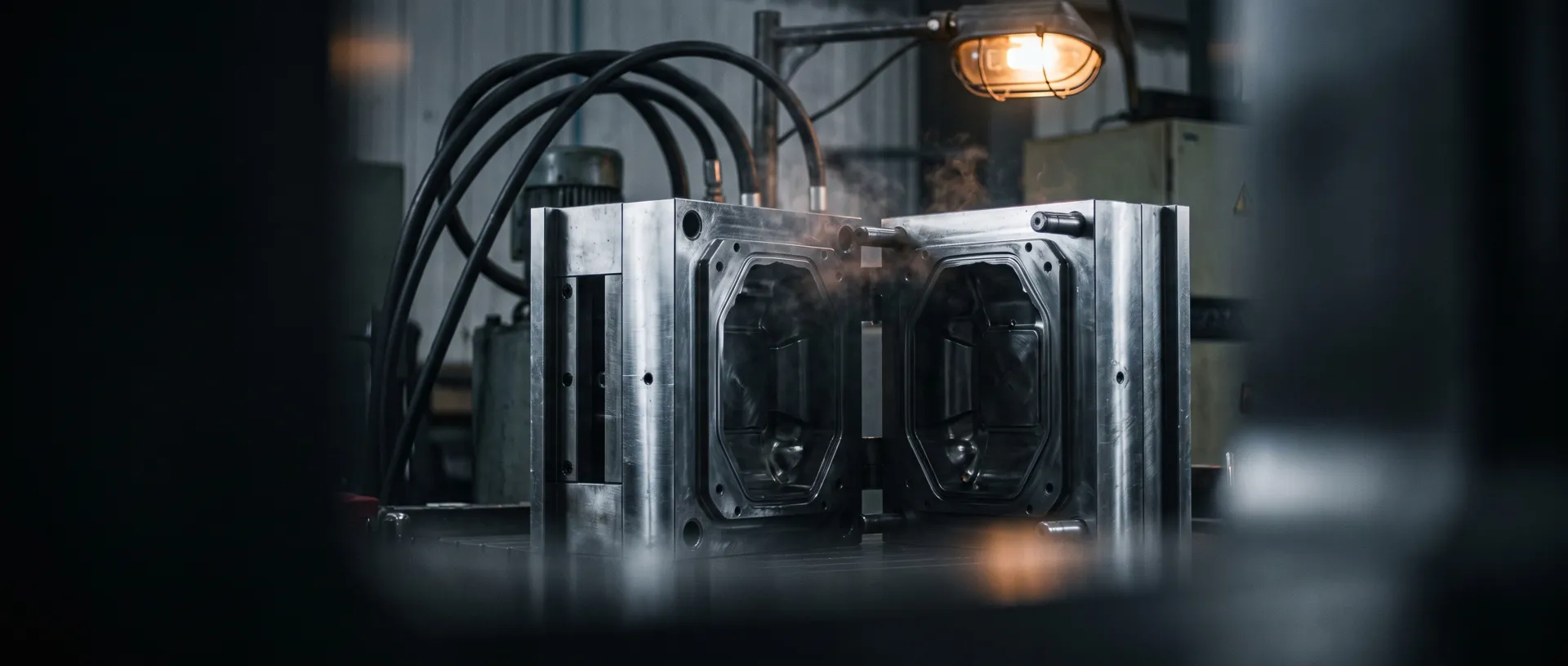
A wall with no draft angle drags on the core when the mold opens, which scars the surface and shortens tool life. Generous draft on non-cosmetic walls is the single cheapest change on most drawings we see.
2. Keep wall thickness even across the part
A thick section next to a thin one cools at a different rate and pulls porosity toward the thick side. Even wall thickness is what actually gets you a sound casting, not extra material where you think you need "strength."
3. Put the parting line where nobody will look for it
Every parting line leaves a trace of flash, however light. Decide up front which face is cosmetic and let the tool designer route the parting line to the back or bottom of the part instead.
4. Cast a feature instead of machining it, where the tolerance allows
A boss or a rough hole can often be cast directly instead of added as a milling operation afterward. Reserve the ±0.001 in. (0.025 mm) machined tolerance for the bores and faces that genuinely need it.
5. Choose the alloy for the wall section, not out of habit
ADC12 aluminum suits larger, thicker-wall parts where weight matters. Zamak 3 zinc suits thinner, more detailed sections. Specifying the alloy that matches your wall thickness avoids a tooling rework after first samples.
04 — Where this is the wrong process
What die casting does not do here.
Not for large structural castings or one-off runs
Die casting only pays for itself once tooling is amortized over real volume. Our MOQ starts at 5,000 pieces, and below roughly 2,000 pieces of any kind we are not competitive and will say so instead of quoting a tooling cost you cannot justify.
For a brass or bronze body — a valve or fitting, typically — sand casting is the right process, not die casting. See sand casting.
05 — One supplier, one line
A casting is a raw part until it is machined and finished.
This is the routing we run most: die cast, machine, deburr, coat, inspect and pack — five operations, one part number, one invoice.
CNC milling
Datum faces, bores and threads cut to print on the casting after it comes off the tool.
See CNC millingSurface finishing
Powder coat, plate or anodize the same casting before it ships, on the same site.
See the finish menuCNC turning
A turned bushing or shaft pressed into a die-cast housing before final inspection.
See CNC turning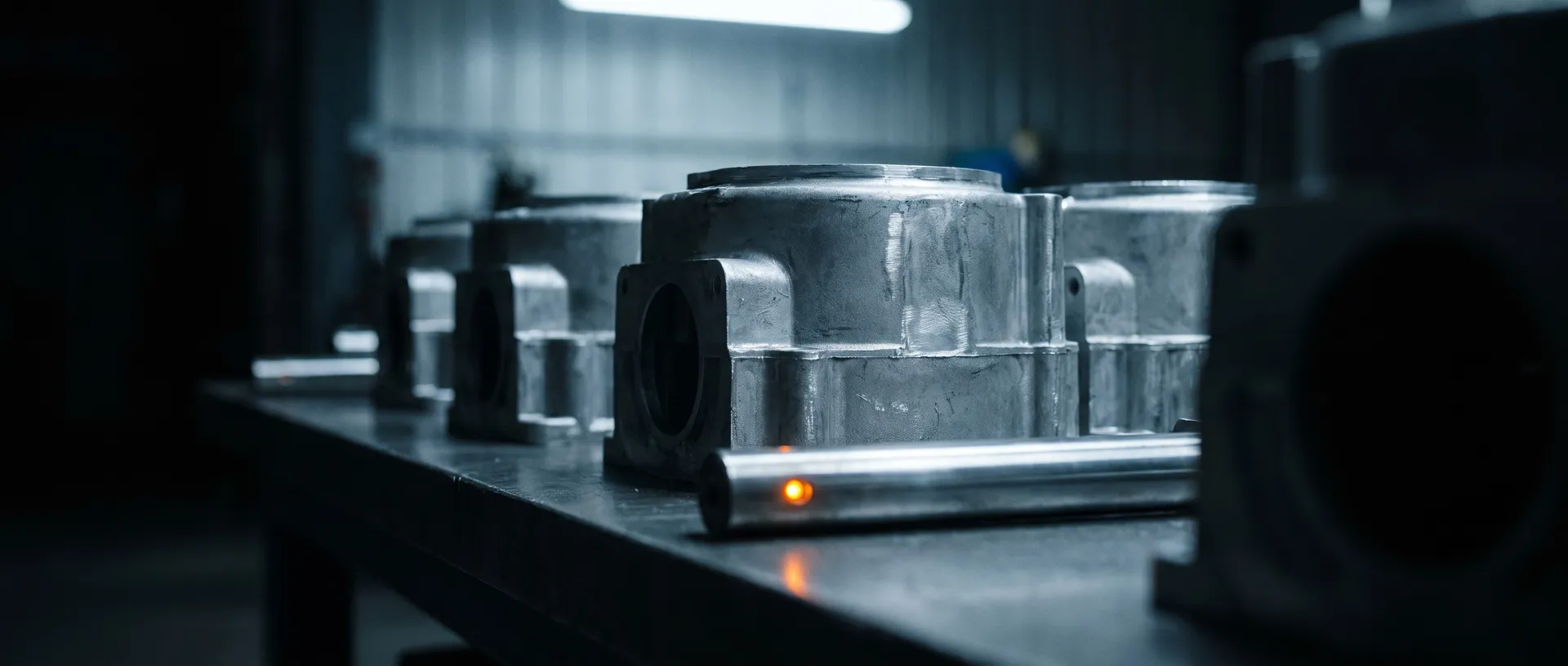
Who owns the tooling?
You do, once it is paid for. We design, cut and maintain it for the life of the part, and it stays on our floor unless you ask us to ship it, but the tool is your asset from the day it is invoiced.
ADC12 or Zamak 3 — how do I choose?
Weight and corrosion needs usually point to ADC12 aluminum; thinner walls and tighter as-cast detail usually point to Zamak 3 zinc. Send the drawing and we will tell you which alloy fits the wall sections you have drawn, not the one that is easiest to quote.
Can you cast and machine the same part?
Yes — that is the routing we run on most die-cast programs. The casting goes straight to our CNC milling cell for datum faces, bores and threads, then to finishing, all under one part number.
Send a die-cast drawing. See the tooling cost first.
STEP or PDF. You get the tooling investment, a unit price at your volume, the lead time, and a short note on anything we would change to take cost out.