Guide
Vietnam vs China machining and die casting in 2026: should you move your metal parts?
Vietnam is a good alternative to China for some machined and die-cast parts, not all of them. Vietnam vs China machining and die casting is a per-part decision in 2026, not a country-wide one: since July 24, 2026 both origins pay the same new Section 301 duty, so the case for moving rests on China’s older Section 301 duty on your HTS line. Move a machined or die-cast part to Vietnam when that older duty applies, the part is not an article of steel, aluminum or copper caught by Section 232, and the supplier can show which operations are done in Vietnam; keep it in China when it needs simultaneous five-axis work, single-micron tolerances, a very large casting or a signed ISO 9001 certificate today, which at Saola Manufacturing is still in progress.
By Saola Manufacturing engineering team · Published · Updated
This page is for a buyer who has turned bushings, shafts and pipe caps, milled brackets, or die-cast aluminum and zinc housings made in China today, for machine tools, gas and water equipment or industrial assemblies, and who is asking whether the 2026 tariff changes make it worth moving a part number. It compares that route, making the part in China and importing it, with sourcing it through Saola, which machines at its lead CNC plant in Vietnam and states the production site of every casting and finish on the quote. It does not rate any Chinese supplier, and Vietnam does not win every row.
On this page
Should you move metal parts production from China to Vietnam in 2026?
Move a part when the duty gap is real on its own HTS line and the part fits the Vietnam supplier’s published scope; keep it in China when either condition fails.
Tariffs alone do not decide it. The checklist below splits part numbers into the two groups, and most buyers end up with some of each, which is why the usual outcome is a second source rather than a full exit.
Move the part to Vietnam if
- Its HTS line carries China’s older Section 301 duty. That older duty, not the new one, is what separates the two countries (see the next section).
- It is not an article of steel, aluminum or copper caught by Section 232, or you accept that its case rests on the older China duty alone. A Zamak 3 zinc casting, for example, is not an article of any of those three metals; confirm its line with your broker all the same.
- It sits inside the supplier’s published scope: at Saola, a turned part from bar or tube, a milled feature on a casting or blank, or a small to mid-size ADC12 aluminum or Zamak 3 zinc die casting that is machined and finished after casting.
- Its volume is steady, so setup, gauging and die-casting tooling can be paid back over real production rather than a single short run.
- You can qualify it before you commit: a first article, your own measurements, and an overlap with the current supplier.
Keep the part in China if
- It needs simultaneous five-axis machining or single-micron tolerances, or it is a housing cut entirely from billet.
- It is a large structural casting, a one-off run, or a die casting in an alloy other than ADC12 or Zamak 3, which is outside Saola’s published die-casting scope.
- Your approved-vendor list needs a third-party audit report, or a signed ISO 9001 certificate, today; Saola’s ISO 9001 certification is in progress, not held. No third-party audit has been performed yet either.
- Its line sees no China-only Section 301 duty and it is a Section 232 article. Then neither origin has a duty advantage, and moving buys you only a second source.
- Your volume needs a supplier with a multinational balance sheet. Saola is a small team working with one family-held lead CNC plant, and says so on its factory page.
If Mexico is also on your shortlist, read the metals proclamation of June 2026 before comparing, because it gives qualifying goods of Canada and Mexico under the USMCA a treatment that neither Asian origin gets (White House proclamation).
What tariff does the US charge on machined parts from Vietnam vs China?
A new Section 301 duty now applies to products of China and of Vietnam at the same rate, so the gap between them is whatever China’s older Section 301 duty adds on your HTS line.
In its notice published on July 28, 2026, USTR set a 12.5 percent Section 301 duty on products of China and, in a separate determination, on products of Vietnam, for goods entered on or after 12:01 a.m. eastern time on July 24, 2026 (Federal Register). That duty does not separate the two countries.
What does separate them is the older China action. Per HTS chapter 99, headings 9903.88.01, 9903.88.02 and 9903.88.03 still add 25 percent to products of China on the subheadings enumerated for them (the lines usually called Lists 1 to 3), and heading 9903.88.15 adds 7.5 percent on the List 4A lines (HTS chapter 99). Vietnam has no equivalent heading. On a line under one of the 25 percent headings, a China-origin part therefore carries 37.5 percent in Section 301 duty and a Vietnam-origin part carries 12.5 percent, before the ordinary duty that applies to both.
Three cautions. Some Chinese products hold a USTR exclusion from the older duty, listed in the same chapter. The same chapter also carries later China-only Section 301 headings under US note 31 (the 9903.91 headings), which add further duty on specific enumerated products. And a line on none of these lists sees no Section 301 gap at all, so the first question for any part, machined or die-cast, is its HTS classification, not its country.
When does Section 232 erase the advantage for steel and aluminum parts?
When the part is an article of steel, aluminum or copper, or a listed derivative, the new Section 301 duty does not apply to it from either country, and the Section 232 duty that does apply draws no line between China and Vietnam.
US note 52(f) to HTS chapter 99, the note behind heading 9903.05.90, says the new duties “shall not apply to” articles of aluminum, of steel or of copper, or to the derivative aluminum or steel articles provided for in headings 9903.82.02 and 9903.82.04 through 9903.82.26. The metals duties themselves sit in US note 16 of the same chapter, which works from the article’s classification and metal content; its text sets no separate treatment for China or for Vietnam. For listed articles outside HTS chapters 72, 73, 74 and 76, note 16 applies only where the listed metal is at least 15 percent of the article’s weight, per HTS chapter 99.
The presidential proclamation of June 1, 2026 adjusted the aluminum, steel and copper regimes again, and its text does not name Vietnam or China (White House). So for a metals article the two Asian origins still meet the same Section 232 rules.
Turned steel bushings, pipe caps and threaded fittings are the part family most likely to sit on those lists, and a die-cast aluminum part classified in chapter 76 is an article of aluminum. For those parts the new Section 301 duty is replaced rather than equalized, both origins face the same metals duty, and any remaining case for Vietnam rests on the older China duty alone. Whether that older duty still applies alongside Section 232 on your particular line is a classification question for your customs broker, not something a supplier’s website can settle.
This is where the Vietnam advantage shrinks, sometimes to nothing, and why the tariffs and origin page refuses to quote a blanket saving. Run each part number on its own.
What are the risks of sourcing machined and die-cast parts from Vietnam?
Five risks decide most moves: an origin claim that fails, a metals duty that removes the gap, a supplier too small for the volume, loose control of tooling and drawings, and quality evidence that is thinner than a certificate.
- Transshipment and origin. If CBP finds that a part only passed through Vietnam, it is treated as a product of China and pays China’s duties, and evasion cases are investigated under the Enforce and Protect Act (CBP, EAPA). The supplier must make the part, not finish or repack it; the origin section below sets out the test, and the transshipment tariff guide explains what became of the 2025 transshipment order.
- Section 232 metals duty. For an article of steel, aluminum or copper, the duty case can fall to the older China duty alone, as the section above shows. Classify the part before you price the move.
- Capacity and scale. Vietnam’s precision supplier base is thinner than China’s, and many plants are small. Saola works with one family-held lead CNC plant; ask for its capacity table before you move a high-volume family, and keep the Chinese source running until production lots match the approved sample.
- Tooling and drawing control. A die-casting die is the most expensive thing you will leave at an overseas plant. Settle who owns it, and what happens to it if you leave, in writing; at Saola, tooling ownership is confirmed in the written quote. The tooling ownership guide lists the clauses to ask for, and an engineering change notice keeps the drawing revision under your control.
- Quality evidence. A new supplier’s word is not evidence. At Saola, ISO 9001 certification is in progress, not held, no third-party audit report exists yet, and no on-time or PPM record has been compiled; what you get instead is a first-article report, your own sample sign-off and a dimensional record with each lot (quality page). Judge any Vietnam supplier on the same documents, using the first article guide and the supplier vetting guide.
Is Vietnam good at precision die casting and CNC machining?
For turned, milled and small to mid-size die-cast parts with a defined scope, yes; for simultaneous five-axis work, single-micron tolerances or very large castings, Vietnam’s precision base is thinner than China’s, and Saola says so on its own homepage.
Saola works to a defined scope, and it publishes the work it turns down:
- No simultaneous five-axis machining, on turning, on CNC milling or on any other process.
- No single-micron tolerances. Parts that need them belong with a shop that grinds and measures at that level.
- Not a billet job shop. The mills are set up for secondary work on castings and on turned parts. A housing cut entirely from billet is better placed with a dedicated machining house.
- Not for large structural castings or one-off die-cast runs. Die casting only pays for itself once tooling is amortized over real volume, and the die casting page says so before any tooling is quoted.
- Two die-casting alloys, no others: ADC12 aluminum and Zamak 3 zinc.
- Not competitive on very small runs of a turned part, because setup and gauging time do not amortize.
- ISO 9001 certification is in progress, not held. If your approved-vendor list needs a signed certificate today, Saola is not the right supplier yet.
If your Chinese supplier does any of these for you, keep that part where it is.
What Saola publishes that you can check
Saola publishes its turning limits, thread standard, bar grades, die-casting alloys and qualification deliverables as fixed specifications, so every quote can be held against them.
Each point below can be checked on a published page, a video call or the first article:
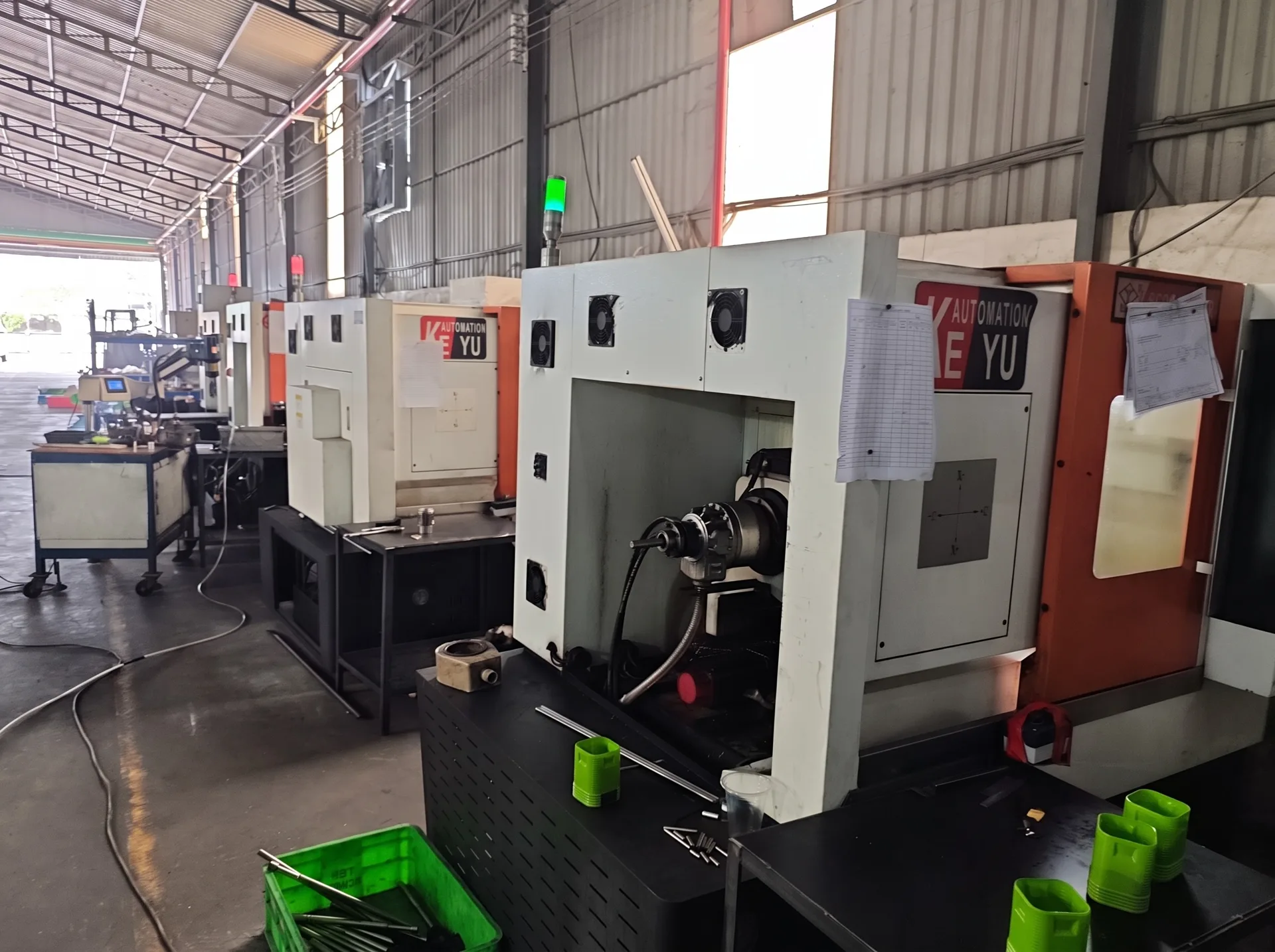
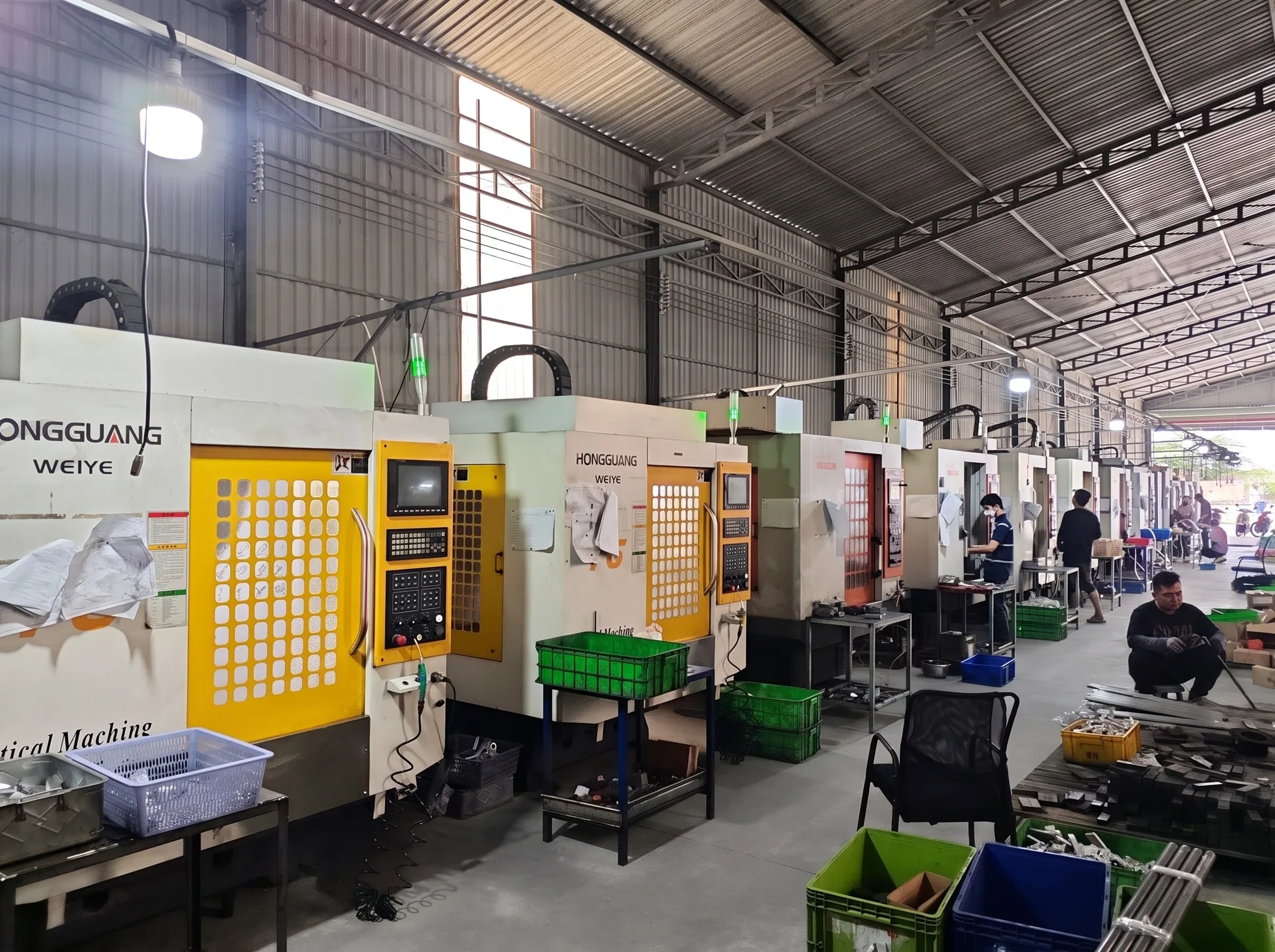
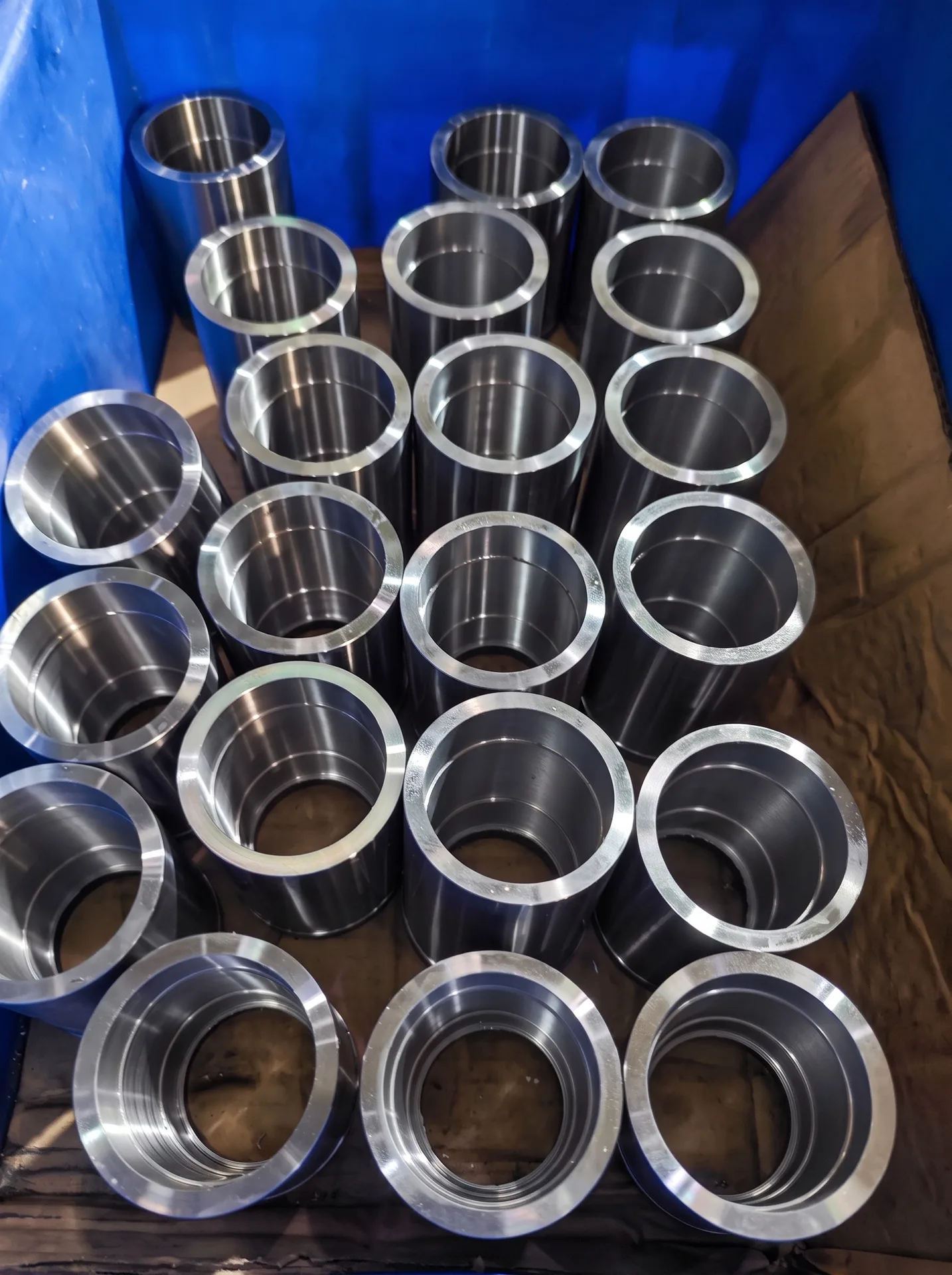
- CNC turning on conventional CNC lathes at our lead plant, from bar and tube, for small-diameter bushings, spacers, caps, inserts, shafts and eccentric rings, described on the CNC turning page.
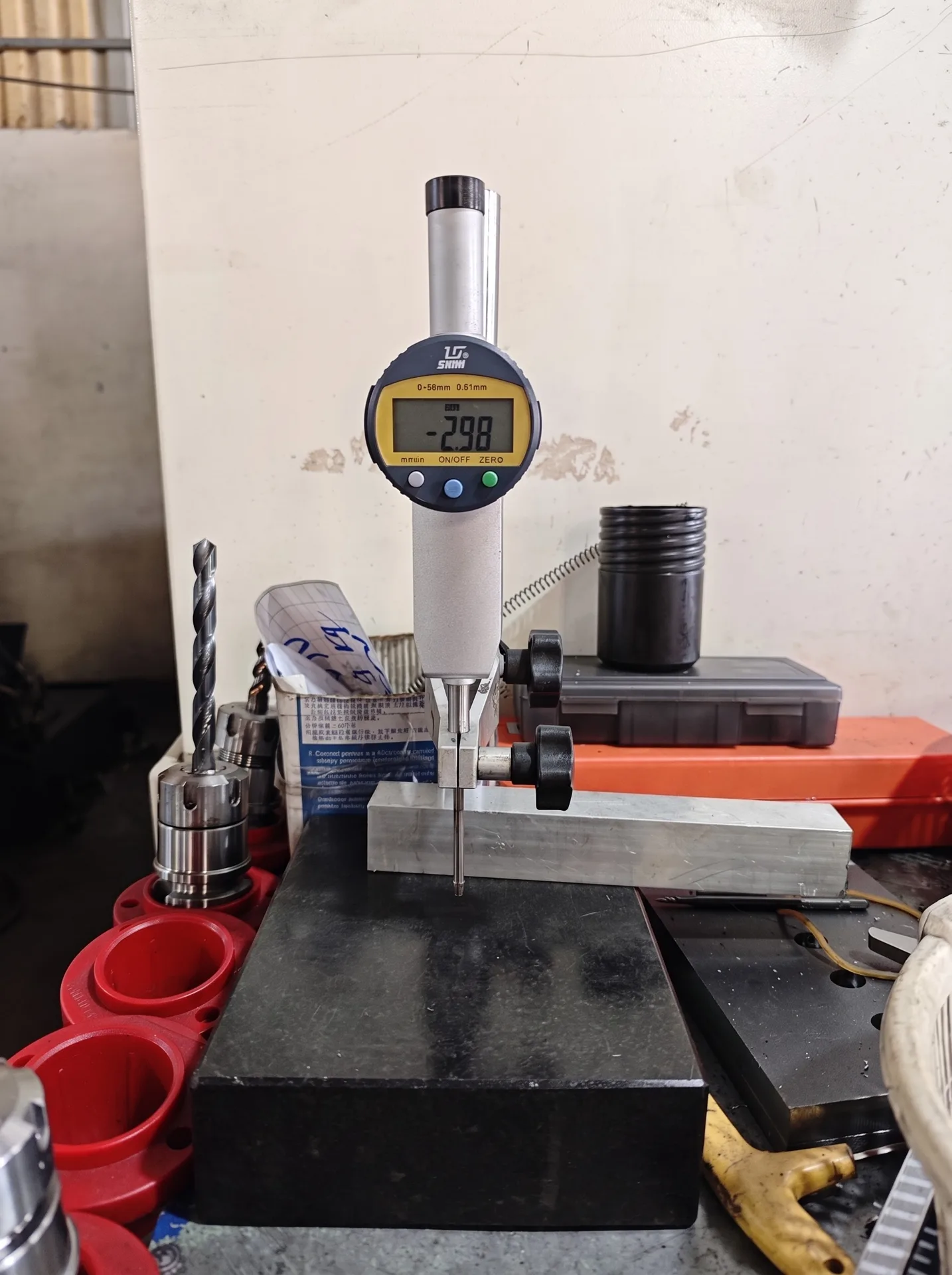
- ANPT and NPT threads to ASME B1.20.1, checked with go/no-go gauges before a lot ships rather than sampled after a complaint.
- Seven named bar and tube grades: 52100, C1117 and 12L14 steel; 2011-T3 and 6061-T6 aluminum; silicon bronze; and ASTM A513 DOM steel tube. The grade on the drawing is the grade that runs, not a lookalike.
- Die casting in ADC12 aluminum and Zamak 3 zinc from partner foundries we manage, for housings, bases and covers that get a bore, a thread or a datum face machined after casting at our lead CNC plant; the quote names the production site and origin (die casting page). Choosing between the two alloys is covered in zinc vs aluminum die casting.
- One PO, one managed route. A casting is milled, a turned part gets its flat or cross hole, and zinc plating, powder coating or RoHS trivalent chromate applied by our partner finishing plants (surface finishing) goes on the same part number.
- Six qualification steps, each with a deliverable: a marked-up copy of your drawing, a written DFM list, a tooling report, a first-article report, your sample sign-off, and a dimensional record with each production lot (quality page).
- A fast quote from a complete drawing package; the reply time is stated in the FAQ.
- An origin file per part number: material traceability, a written English process routing, a Certificate of Origin Form B issued through Vietnam’s Ministry of Industry and Trade, and a CBP binding-ruling request prepared on request.
- A live video walk of the floor, or a pickup at Tan Son Nhat airport for a visit, before any purchase order (factory page).
How do the two routes compare, row by row?
The table sets making the part in China today beside making it at Saola, and marks a cell as not published wherever there is no source to fill it.
Duty rows come from the USTR notice and HTS chapter 99; Saola rows come from its own published pages. No figure for Chinese shops is estimated.
| Dimension | Making it in China (current method) | Saola, Vietnam | Source |
|---|---|---|---|
| New Section 301 duty, from July 24, 2026 | 12.5% | 12.5% | USTR notice, Federal Register, July 28, 2026 |
| Older Section 301 duty | 25% on lines under 9903.88.01–.03; 7.5% under 9903.88.15; further duty on products listed under US note 31 (9903.91 headings); none on other lines | None | HTSUS chapter 99 |
| Articles of steel, aluminum or copper | Section 232 applies; new Section 301 duty does not | Section 232 applies; new Section 301 duty does not | HTSUS chapter 99, US notes 16 and 52(f) |
| Depth of precision supplier base | Broader | Thinner, by Saola’s own published statement | Saola homepage, section 05 |
| Plant scale | Varies by shop | One small, family-held lead CNC plant, plus partner plants we manage for casting, stamping and finishing; capacity table on request | Saola factory page and homepage |
| Simultaneous five-axis, single-micron work | Not published here; varies by shop | Not offered | Saola FAQ |
| Turning envelope | Not published here | Bar and tube parts on conventional CNC lathes; size envelope confirmed in the quote | Saola CNC turning page |
| Thread gauging | Not published here | ANPT and NPT to ASME B1.20.1, go/no-go before shipment | Saola CNC turning page |
| As-machined finish, turned | Not published here | 125 RMS | Saola CNC turning page |
| Die-casting alloys | Not published here; varies by shop | ADC12 aluminum and Zamak 3 zinc, no others | Saola die casting page |
| Die-cast part scope | Not published here | Small to mid-size housings, bases and covers; not large structural castings or one-off runs | Saola die casting page, section 04 |
| Cast, machine and finish under one PO | Varies by shop | Yes; casting and finishing at partner plants we manage, machining at the lead CNC plant | Saola die casting page, section 05 |
| Die-casting tooling ownership | Set by your contract | Confirmed in the written quote | Saola die casting page |
| Very small runs | Not published here | Not competitive; said before quoting | Saola CNC turning page, section 04 |
| ISO 9001 | Varies by shop | In progress, not held | Saola FAQ |
| Third-party quality audit report | Varies by shop | None performed yet | Saola quality page, section 05 |
| Country of origin | China | Vietnam where the work done there effects a substantial transformation; CBP decides | 19 CFR 134.1(b) |
| Unit price, lead time, minimum quantity | Not published here | Set per part in the written quote | Saola FAQ |
Does machining or casting a part in Vietnam make it Vietnamese origin?
Only if the work done in Vietnam transforms it: under 19 CFR 134.1(b), further work or material added in another country “must effect a substantial transformation” to make that country the origin.
The test is applied part by part, and CBP decides the outcome, not the supplier. Plating, packing or re-marking a part that was already machined or cast in China is the weakest fact pattern there is, and it is exactly what a move to Vietnam must not look like. Machining a casting that was poured in China is a separate, harder question, covered in the guide on whether machining a casting changes its origin.
Every machined part Saola ships is machined at its lead CNC plant in Vietnam; castings, stampings and finishing come from partner plants we manage, and the quote states the production site and country of origin for each part. Raw material is a separate question. Saola records where the bar and ingot for each part number came from, including when that source is China, in a material traceability file, next to a written routing of the operations performed in Vietnam. For the parts with the most duty at stake, Saola will prepare and file a binding-ruling request with CBP on request; the ruling is CBP’s decision, made under 19 CFR part 177, and the binding ruling guide walks through the request.
The importer of record still carries the origin claim, so share the routing and traceability file with your broker before the first shipment.
How should you test a move on one part number?
Pick one machined or die-cast part, price it at both origins against its own HTS line, and qualify it with a first article before you move the family.
- Pick the part. Start with one that is not an article of steel, aluminum or copper on the Section 232 lists, or accept that its duty case rests on the older China duty alone.
- Confirm the line. Ask your broker which HTS subheading applies and which Section 301 headings attach to it at each origin.
- Send the full package. A STEP file, a dimensioned PDF, the annual volume and your acceptance criteria, prepared the way the RFQ guide describes. For a die-cast part, say who will own the tooling.
- Measure the first article yourself. Compare your numbers with the supplier’s report before you approve the sample.
- Overlap the sources. Keep the Chinese supplier running until the first production lots match the approved sample.
Frequently asked
Should I move metal parts production from China to Vietnam because of tariffs?
Only part by part. Since July 24, 2026 both countries pay the same new Section 301 rate, so tariffs favor Vietnam only on lines that still carry China’s older Section 301 duty and are not Section 232 metals articles; check each line with your broker, then qualify one part before moving a family.
Is CNC machining or die casting in Vietnam cheaper than in China?
Not as a rule. The duty gap is real on lines covered by China’s older Section 301 headings, but unit price and die-casting tooling are set per part in a written quote, and Section 232 can remove the gap for articles of steel, aluminum or copper.
Do Vietnam and China pay the same new Section 301 rate?
Yes. Per USTR’s notice of July 28, 2026, products of both countries carry the same new Section 301 rate; China’s older Section 301 duties continue on the lines they cover.
How do I avoid transshipment problems when sourcing parts from Vietnam?
Buy from a supplier that makes the part, not one that finishes or repacks it, and hold the evidence: a written routing of the operations done in Vietnam, a material traceability file that names the raw-material source, and, where the duty at stake is large, a CBP binding ruling. Share that file with your broker before the first shipment.
How do I find a reliable metal parts manufacturer in Vietnam?
Ask for documents rather than claims: the business registration, a live video walk of the floor showing the process your part needs, a process routing, a first-article report on your own part, and a plain statement of what the plant does not do. The supplier vetting guide lists the checks, and a quote request to Saola gets you the same documents.
Does Saola buy finished parts from China and relabel them?
No. Machined parts are made at Saola’s lead CNC plant in Vietnam, castings, stampings and finishing come from partner plants we manage, and each quote states the production site and country of origin. Where raw material comes from China, the traceability file says so, and the origin outcome remains CBP’s decision.
Sources
- Notice of Actions in Section 301 Investigations of Acts, Policies, and Practices of Various Economies, USTR, Federal Register document 2026-15181, 91 FR 47318, July 28, 2026
- Harmonized Tariff Schedule of the United States, chapter 99, USITC, 2026 Revision 19, accessed September 2026
- Further Adjusting the Tariff Regimes for Imports of Aluminum, Steel, and Copper into the United States, The White House, proclamation of June 1, 2026, accessed October 2026
- 19 CFR 134.1, Definitions, Electronic Code of Federal Regulations, current as of September 22, 2026
- 19 CFR part 177, Administrative Rulings, Electronic Code of Federal Regulations, accessed October 2026
- Enforce and Protect Act (EAPA), US Customs and Border Protection, accessed October 2026
- ASME B1.20.1, Pipe Threads, General Purpose (Inch), ASME, 2013 edition, reaffirmed 2018