Equipment housings & bases
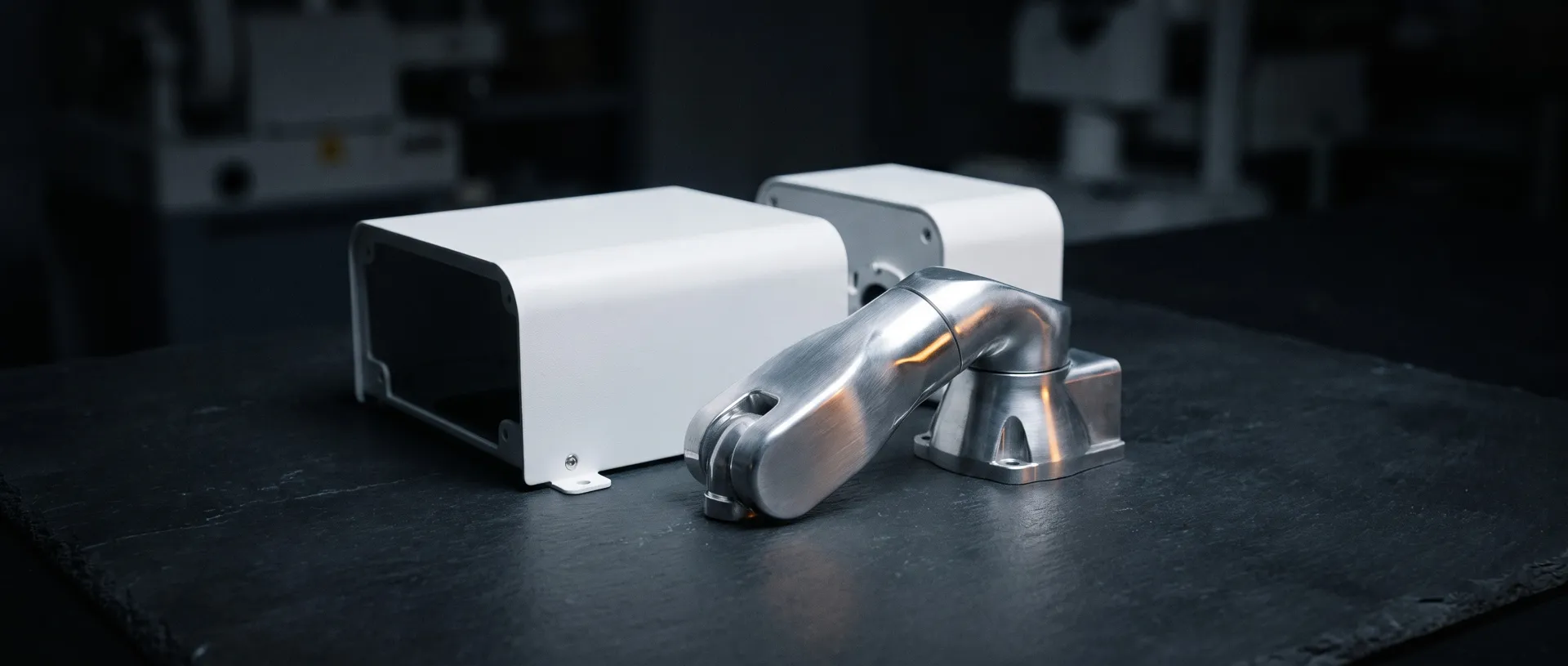
Die cast in ADC12 aluminum, machined for mounting bores and datum faces, then coated to a cosmetic standard on every visible surface.
Medical, dental & veterinary equipment · Vietnam-made
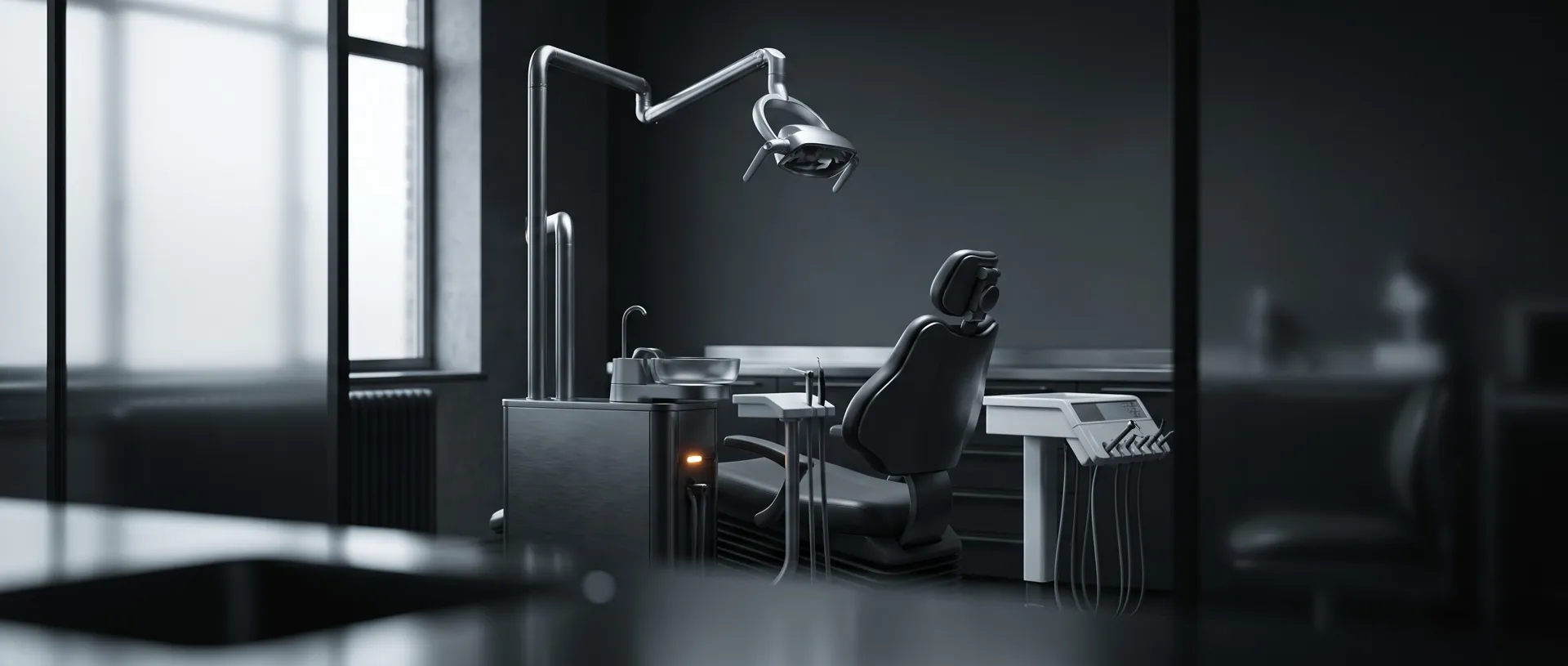
Housings, bases, covers, arms and lamp heads for cabinetry, chairs, lighting and carts. These are cosmetic and structural equipment parts only — not patient-contact or implantable devices, and nothing here should be read as medical-device certified.
01 — The parts we make for this industry
We build the metal parts that go around the equipment your clinical staff and patients actually see and touch on the outside. We do not build the parts inside a device that touch the patient directly.
Die cast in ADC12 aluminum, machined for mounting bores and datum faces, then coated to a cosmetic standard on every visible surface.
Cast and machined arm and head assemblies for exam lights and task lighting, finished to match the rest of the equipment shell.
Stamped steel hinges, latches and mounting brackets for clinic and lab cabinetry, plated for a consistent finish across a production run.
Sand-cast silicon bronze bushings machined and turned in-house for chair and cart mechanisms that see repeated cycling.
Turned or die cast in Zamak 3 zinc or brass, gold plated, electroplated or powder coated to match the cabinet or chair finish.
Formed and machined covers with parting lines dressed flush before coating, so the seam does not show once the part is painted.
02 — What actually matters on these parts
These parts sit in an exam room where a patient looks at them for twenty minutes. The bar is cosmetic, not just dimensional.
Plated, powder coated or pad-printed surfaces that face the patient or the operator are graded against an agreed acceptance sample. Color, gloss and freedom from pinholing are checked before pack.
A die-cast parting line left proud reads as a defect on a coated equipment cover. We dress it flush before the part goes to finishing, every time, not on request.
Plating runs RoHS-compliant blue trivalent chromate where zinc plating is specified, and material sourcing is controlled to RoHS across the part.
Powder coat and pad print are matched to an approved sample and checked batch to batch. A replacement cover ordered a year later still matches the set.
03 — Typical routing by part family
Process route, material and finish for the part families above. Confirmed against your drawing before quoting.
| Part family | Process route | Material | Finish |
|---|---|---|---|
| Equipment housings & bases | Die casting + CNC milling | ADC12 aluminum | Powder coating, pad print |
| Lamp heads & arms | Die casting + CNC machining | ADC12 aluminum / Zamak 3 zinc | Anodizing or powder coat |
| Cabinet hardware & brackets | Stamping | Steel | RoHS blue trivalent chromate zinc plating |
| Chair pivot bushings | Sand casting + CNC turning | Silicon bronze | Polish, oil-dip rust protection |
| Knobs, levers & trim | CNC turning + die casting | Zamak 3 zinc / brass | Gold plating, electroplating |
04 — One part, one supplier
A representative routing for this industry. Every step happens inside our own plant, so the caster and the coater cannot point fingers at each other.
ADC12 aluminum shell cast from tooling we own, with mounting bosses set by the die.
Datum faces and mounting bores cut to print for a clean fit to the rest of the assembly.
Parting line ground flush and all edges deburred before anything touches the coating line.
Powder coat matched to sample, then pad-printed with part identification.
Visible-surface grading against the approved sample, individual bagging, cartons under 30 lb.
05 — Where we are the wrong shop
We make the housing, not the instrument. If your part touches a patient directly, is implanted, or sits in a sterile field, it belongs with a supplier qualified for that scope. We are not that supplier, and we will tell you so on the first call.
We do not hold ISO 13485 or an equivalent medical-device quality system, and nothing in our process should be read as implying it. If a device-level certification is a gate on your approved-vendor list, tell us before the drawing goes out.
We control material sourcing and can send certifications for what we buy, but we do not run or claim biocompatibility testing. That qualification is your team's, at the device level.
06 — Before you send a drawing
Short answers here; the rest on the FAQ page.
No. We make cosmetic and structural equipment parts only — housings, bases, arms, covers and cabinet hardware. We do not make patient-contact or implantable parts, and we do not hold ISO 13485.
Yes. Powder coat and pad print are matched to an approved sample and checked at inspection on every run. A reorder months later still matches the original set.
Between 5,000 and 30,000 pieces depending on the process — die casting starts lower. Below roughly 2,000 pieces we are not competitive and will say so instead of quoting badly.
STEP or PDF, one part or a whole family. You get a unit price at your volume, the tooling cost and the lead time. We also flag anything in the drawing we would change for a cleaner cosmetic finish. Turnaround is two business days.