Sand casting · Managed partner foundry
Brass and bronze bodies, cast in sand, machined to print.
Valve and fitting bodies where thread gauging and pressure-boundary integrity are the whole job. Poured by a partner foundry we manage, then bored, faced and gauged in our own plant — you deal with one supplier, one PO and one inspection standard.
- Alloys
- 2
- Brass and bronze valve-body castings
- Hours
- 48
- Quote returned from your drawing
- Pieces
- 5K–30K
- MOQ band; higher-volume programs suit us best
- Inches
- ±.001
- Bore tolerance once cast bodies are machined
01 — How this program is run
Valve and fitting bodies, in real volume.
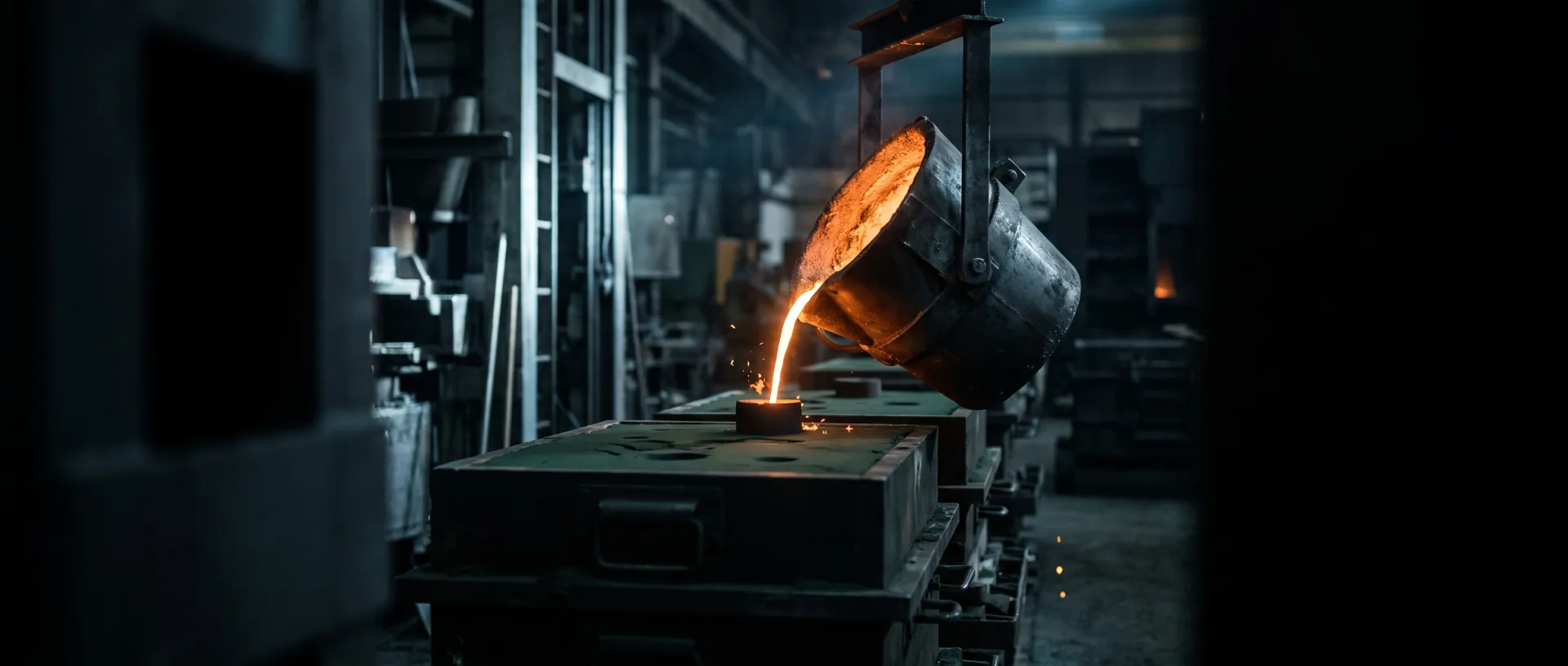
We do not pour metal ourselves. We own the pattern and the drawing, place the pour with an audited foundry in Vietnam, and take every casting through incoming inspection before it reaches our machines. It suits brass and bronze bodies where the alloy itself is doing the corrosion-resistance work that a coating would otherwise have to do.
Typical parts
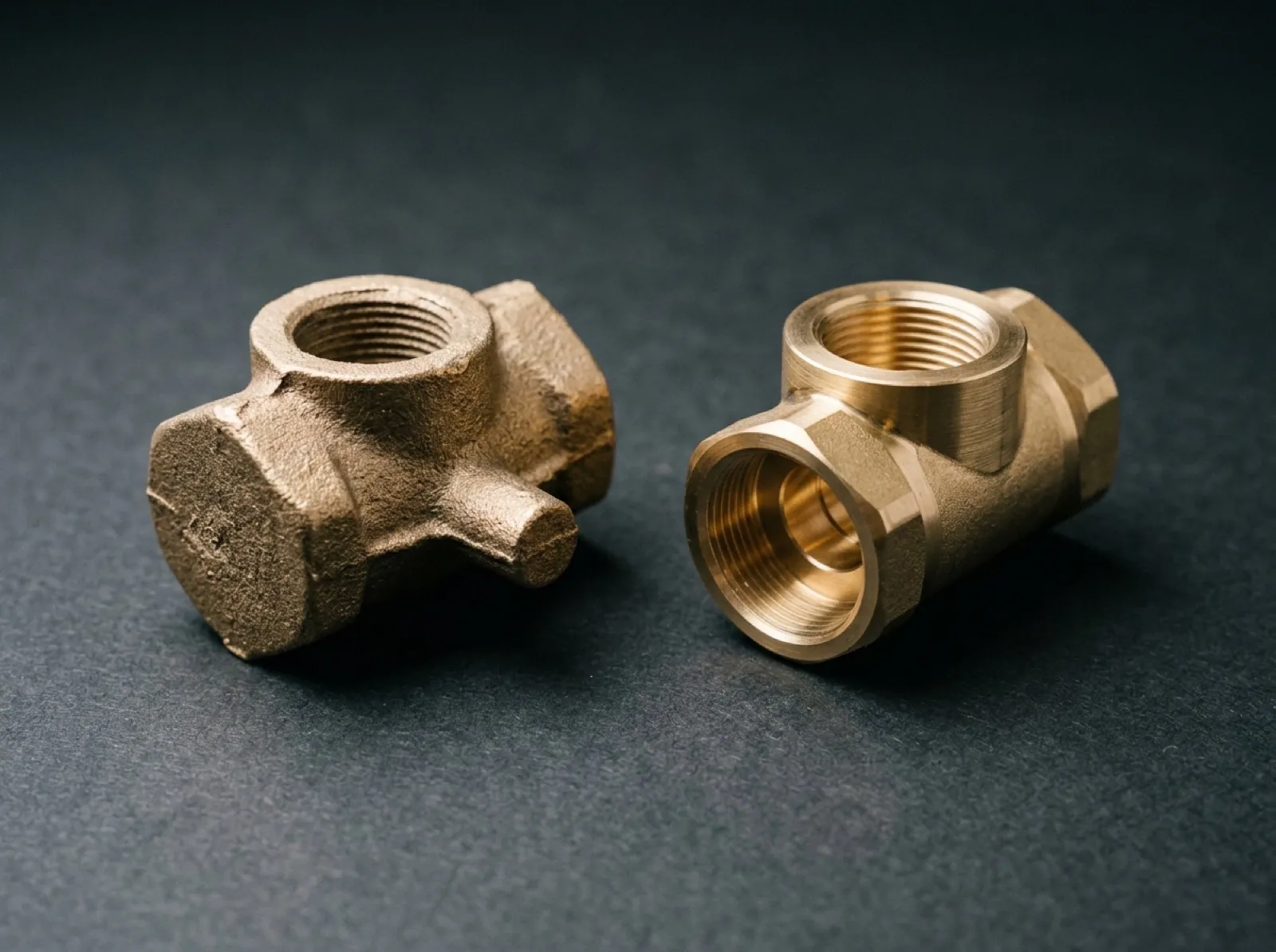
Ball valve bodies, fittings and connector housings for gas and water distribution hardware, cast in brass or bronze and then bored, faced and threaded to print.
Every cast body that carries a thread goes through the same gauge check we run on turned parts — a valve body is only as good as the thread it seals against.
02 — Process parameters
Alloys, machining and terms.
A cast body is a raw part until it is machined; this is how we get it there.
| Parameter | Specification |
|---|---|
| Alloys | Brass, bronze |
| Typical parts | Valve and fitting bodies |
| Post-cast machining | ±0.001 in. (0.025 mm) bores, GD&T concentricity to Ø0.003 in |
| Minimum order quantity | Toward the upper end of our 5,000–30,000-piece band |
| Standard finishing after casting | Polishing, plating as specified, pad printing |
| Terms | FOB Ho Chi Minh City or DDP · tooling 50% up front, 50% on sample approval |
03 — Take cost out of the drawing
Where sand-casting cost actually comes from.
A pattern is cheaper to build and iterate than die-cast tooling, but the same casting-design rules still decide your scrap rate.
1. Draft every cored feature
A bore or pocket with no draft grabs the sand pattern on extraction, which tears the mold face and shows up as a rough or short-filled casting. Add draft to anything the pattern has to pull away from.
2. Keep wall sections even
Brass and bronze shrink as they solidify. A thick section next to a thin one cools unevenly and pulls porosity toward the thick side — even wall thickness is what actually gets you a sound casting.
3. Fillet internal corners
A sharp internal corner is where a casting hot-tears as it cools. A generous fillet radius costs nothing on the drawing and saves real scrap at the foundry.
4. Locate tight tolerances for post-cast machining, not as-cast
Sand casting is not a precision process on its own. Put your ±0.001 in. (0.025 mm) bore and thread call-outs where we are already planning to machine, not on an as-cast surface.
5. Consolidate small bosses into the main body
Every separate boss or lug adds pattern complexity and a place for the mold to fail. Where the assembly allows it, merge small features into the main casting body.
04 — Where this is the wrong process
What sand casting does not do here.
Not for thin-wall precision parts
Sand casting holds a rougher as-cast tolerance than die casting and needs more machining stock removed to get to print. If your part is thin-walled aluminum or zinc and needs tight as-cast dimensions, die casting is the right process, not this one.
This process sits toward the higher end of our MOQ band. Below that, tooling and machining setup do not amortize, and we will tell you honestly rather than quote a number that does not survive a second RFQ round.
05 — One supplier, one line
A cast body still needs a bore, a thread and a finish.
The foundry pours the body. Everything after that — machining, thread gauging and finishing — happens on our own floor, under our own inspection.
CNC milling
Bores and datum faces cut on the cast body, held to the concentricity your drawing calls for.
See CNC millingCNC turning
Threaded stems, caps and fittings machined separately and assembled with the cast body.
See CNC turningSurface finishing
Polishing and plating applied to the finished casting before it is packed and shipped.
See the finish menu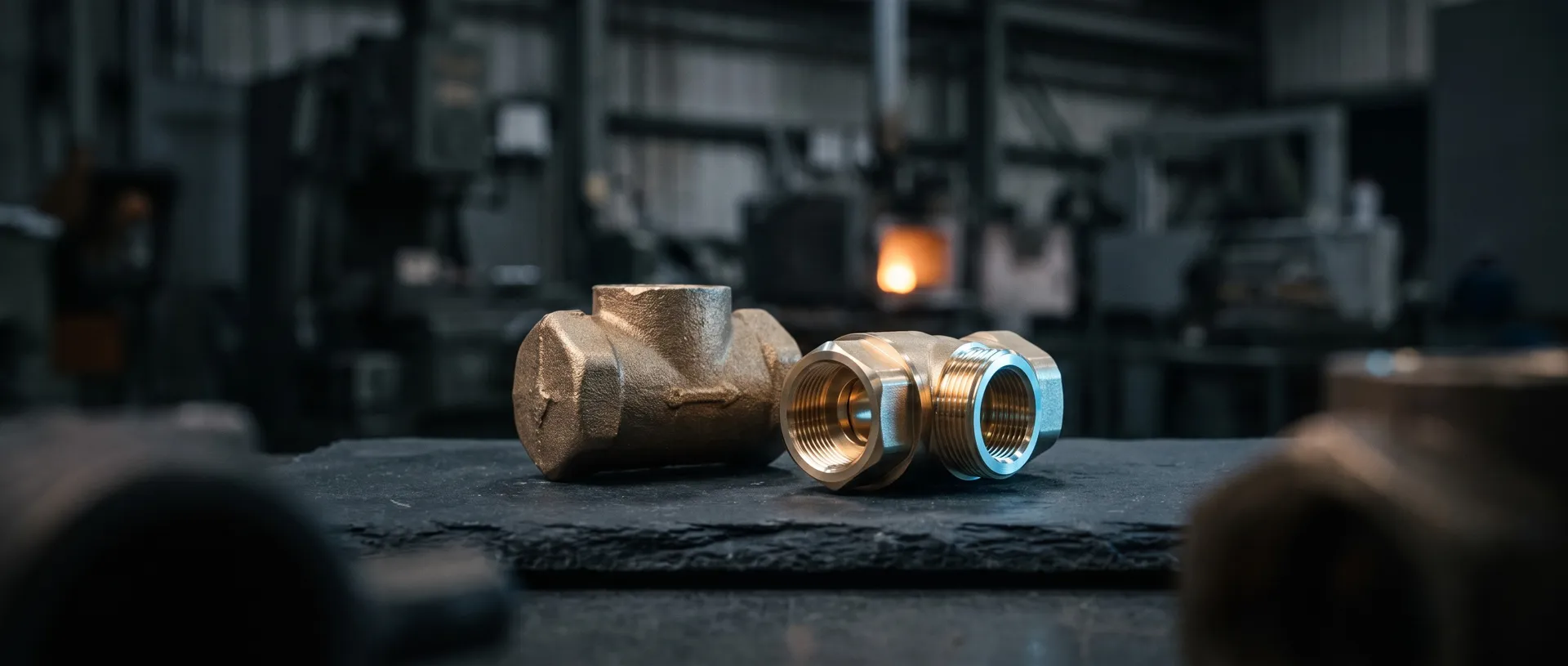
Why sand casting instead of die casting for brass?
Brass and bronze are not the alloys our die-casting tooling is built around — ADC12 aluminum and Zamak 3 zinc are. For copper-alloy bodies we place sand casting with a partner foundry we manage, which suits the higher volumes and thicker walls typical of valve and fitting work.
What is your minimum order for a sand-cast part?
This process sits toward the top of our 5,000–30,000-piece range. If your volume is closer to 2,000 pieces, tell us and we will be honest about whether it is worth quoting.
Can you pressure-test a valve body before it ships?
Dimensional inspection and thread gauging are standard on every lot. For pressure or leak testing requirements specific to your application, tell us the spec on the drawing and we will confirm what we can support before you tool.
Send a valve-body drawing. See what comes back.
STEP or PDF. You get a unit price at your volume, the lead time, and a short note on anything we would change to take cost out — within two business days.