Guide
What is the best die casting alternative to China for US buyers?
Vietnam is a workable die casting alternative to China for many aluminum and zinc parts, judged part by part on duty, origin and fit. A die casting alternative to China is a second source that tools, casts, machines and finishes the same aluminum or zinc part in another country, so the part ships with that country's origin and duty instead of China's. The useful question is what the part costs once it has crossed the border, and whether its origin will hold up.
By Saola Manufacturing engineering team · Published · Updated
On this page
Who is this comparison written for?
It is written for a sourcing or purchasing manager at an equipment maker who buys die-cast housings, covers or bases from a China die caster today and wants a second source outside China. The comparison is against that way of buying, not against any named company.
The typical part is a meter housing, an equipment enclosure or a machine cover in ADC12 aluminum or Zamak 3 zinc, drilled or tapped after casting and then coated. A China die caster builds the die, casts the part, often arranges machining and coating, and the importer pays the duty on arrival.
That method still works. What changed in 2026 is the duty stack on the China side, and this page sets out what changed, where it helps and where it does not.
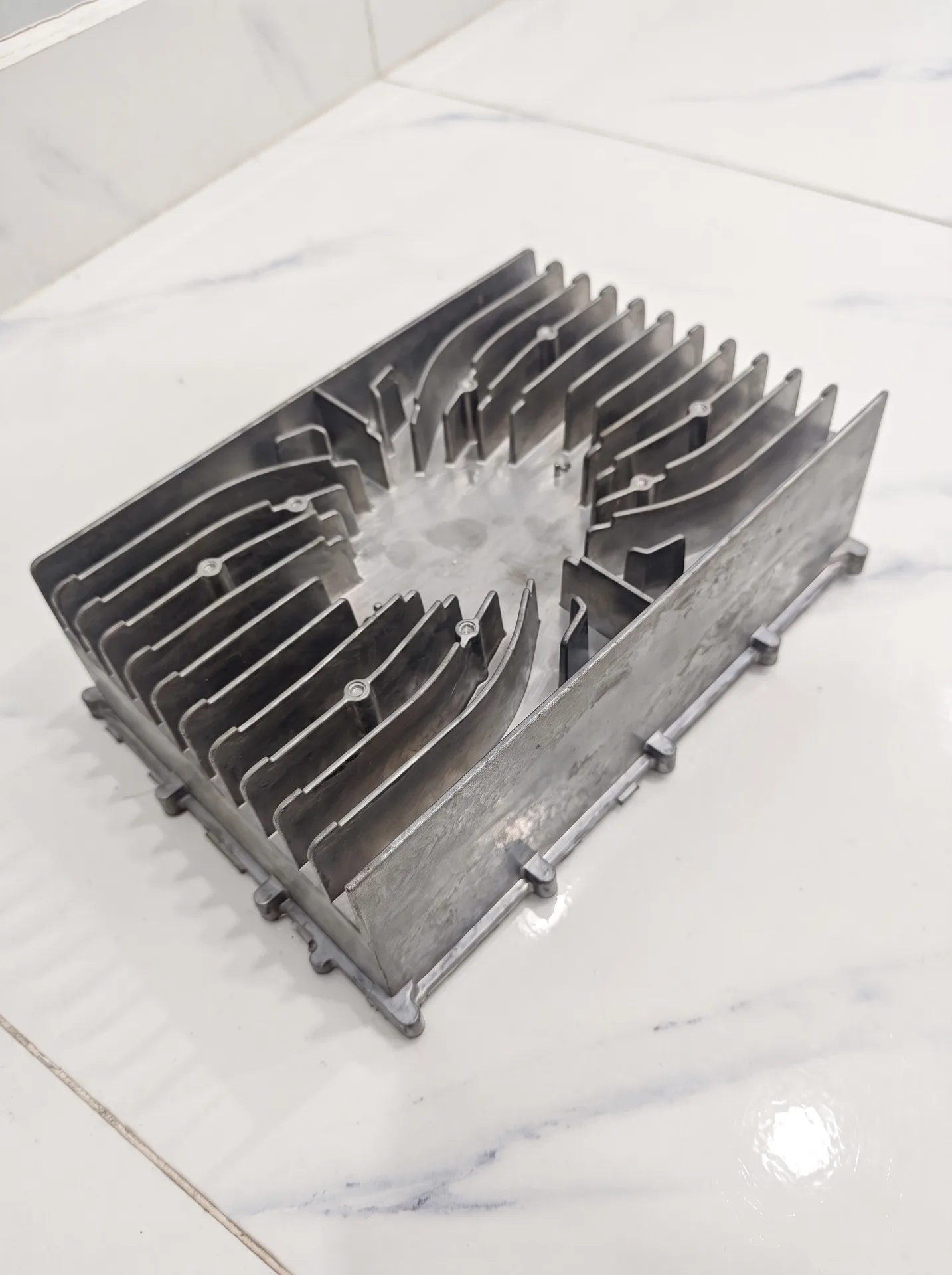
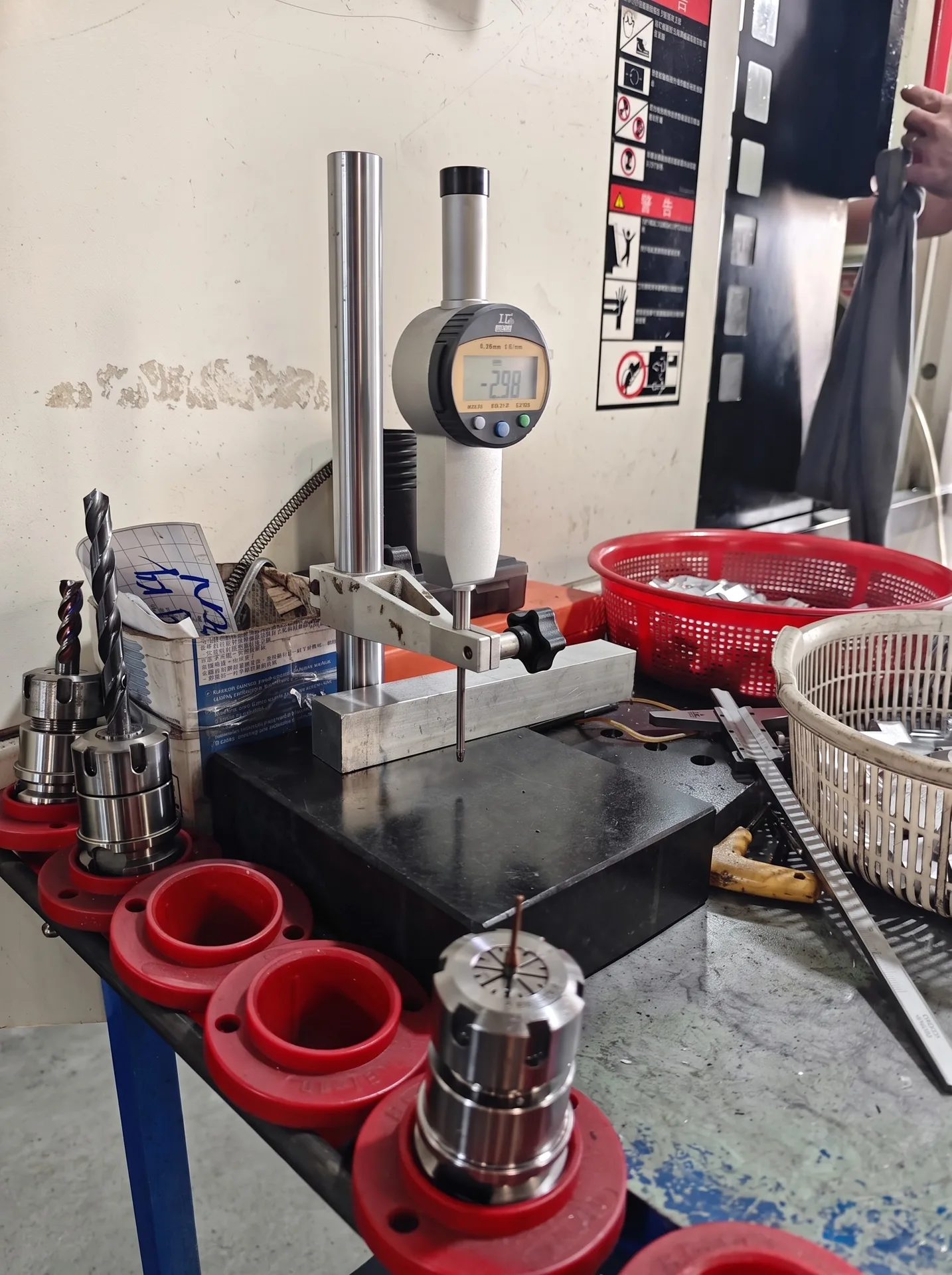
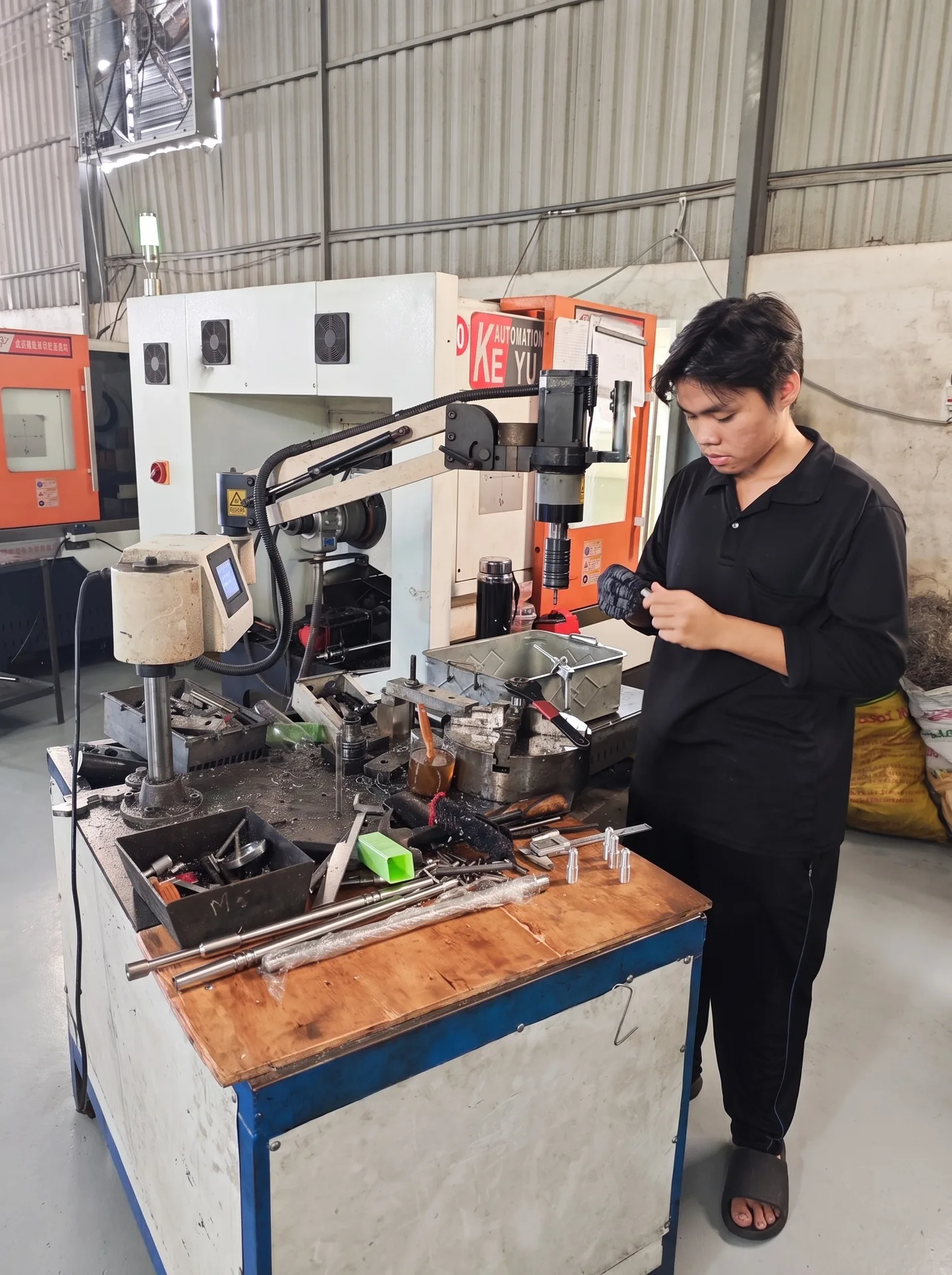
Photos of the Saola floor in Vietnam, digitally cleaned up (AI-assisted). See about our photos.
What duty does a China die casting pay in 2026?
On an HTS line covered by Section 301 Lists 1 to 3, a China-origin casting now carries the legacy 25% duty plus the new 12.5% forced-labor duty, while a Vietnam-origin casting carries only the new 12.5% (USTR notice, Federal Register, July 28, 2026). Both are added on top of the normal duty for the HTS line.
The new duty comes from USTR's Section 301 action on forced-labor import bans, applicable to goods entered on or after July 24, 2026. It sets 12.5% for both China and Vietnam, under headings 9903.05.31 and 9903.05.84 of the tariff schedule (HTS chapter 99, Revision 19, 2026). The notice also adds U.S. note 52 to chapter 99, whose subdivision (a) says goods subject to the new duty remain subject to any other additional duty in the same subchapter.
That is why China stacks. The legacy China duty sits in the same subchapter: 25% under heading 9903.88.01 for List 1 lines, with the List 2 and List 3 headings 9903.88.02 and 9903.88.03 also at 25%, and 7.5% under 9903.88.15 for List 4A lines (HTS chapter 99, Revision 19, 2026). Vietnam has no legacy Section 301 heading at all.
Leave the old emergency layer out of a 2026 comparison. The IEEPA duties, including the reciprocal tariff, were ended by Executive Order 14389 of February 20, 2026, so neither origin pays them now.
| Section 301 layer | China origin | Vietnam origin |
|---|---|---|
| New forced-labor duty (from July 24, 2026) | 12.5% (9903.05.31) | 12.5% (9903.05.84) |
| Legacy duty, List 1 to 3 lines | 25% (9903.88.01 to .03) | none |
| Legacy duty, List 4A lines | 7.5% (9903.88.15) | none |
| Section 301 total, List 1 to 3 line | 37.5% | 12.5% |
| Section 301 total, List 4A line | 20% | 12.5% |
| Goods covered by heading 9903.05.90 (Section 232 metals) | new duty does not apply | new duty does not apply |
What does a die-cast program look like when it is planned in Vietnam?
The clearest evidence is a program plan written before any steel is cut. The one below is a real request for an ADC12 die-cast base, published on the factory page with the customer and drawing kept under NDA.
The part is an aluminum base that carries 25 drilled and tapped holes. The plan sent back with the quote covered the whole route:
- Tool. A 1×2 cavity die, so two parts come off every shot, with a tool life of 80K shots stated in the plan before any repair falls on the buyer.
- Machining. All 25 holes drilled and tapped on four dedicated CNC fixture sets, two parts per fixture, giving a planned capacity of 40K parts a month.
- Finishing. Hand deburring, magnetic finishing for burrs inside small holes, then an ultrasonic wash and oven drying.
- Inspection. Fourteen features in the plan, six of them published with the requirement, the method and the frequency. Every feature is checked on the first article. Machined holes are checked on every part, because a drill can wander on any cycle. Cast heights, flatness, bosses and tapped holes are checked every two hours, because cast features move only as the tool wears.
That split shows where the supplier thinks the risk is. Ask any second source for the same document on your part before you place the tooling order. The full plan is on the factory page.
What does Saola put in writing on a die-cast part?
Each item below points to a page on this site where it is already published. None of it is a promise made only on this page.
- Two alloys, stated plainly. ADC12 aluminum and Zamak 3 zinc, and no others, cast at partner foundries that Saola manages. See die casting.
- Every production site named. Castings come from partner foundries and are machined at Saola's lead CNC plant; the quote names where each step is done and the country of origin. See the factory page.
- One purchase order. The published routing is die cast, machine, deburr, coat, inspect and pack, under one part number and one invoice, with Saola managing each handoff.
- Machining on the casting. Datum faces, bores and threads cut to print. See CNC milling.
- Honest finish advice. ADC12 is not a good anodizing alloy, so the die-casting page tells you to specify powder coat. Powder coating and plating are applied by partner plants Saola manages, and the quote names where; see surface finishing.
- A first-article report on every toleranced dimension before production, and a dimensional record with each lot, as listed on the quality page.
- An origin file per part number. A material traceability file, a written English process routing, a Certificate of Origin Form B issued through Vietnam's Ministry of Industry and Trade, and, on request, a prepared CBP binding-ruling filing. See tariffs and origin.
- No blanket saving claimed. The tariffs page says where the advantage shrinks.
- A comparison against your own HTS code. A written note on which duties apply at each origin.
- Certification status stated. ISO 9001 is not held yet; certification is in progress, and the quality page lists what can be sent instead.
How do the two routes compare, row by row?
The table compares the current buying method with a Vietnam source on facts that can be checked. Where a figure is not published, the cell says so rather than guessing.
The China column describes the buying method, not any one company, so only its duty rows are fixed by the tariff schedule; the rest depend on the supplier you use today.
| Dimension | China die caster (current method) | Saola, Vietnam | Source |
|---|---|---|---|
| New Section 301 duty | 12.5% | 12.5% | USTR notice, July 28, 2026 |
| Legacy Section 301 duty | 25% on List 1 to 3 lines, 7.5% on List 4A lines | none | HTS chapter 99, Revision 19 |
| Section 301 total on a List 1 to 3 line | 37.5% | 12.5% | HTS U.S. note 52(a) stacking |
| Goods under heading 9903.05.90 (aluminum, steel or copper articles and listed derivatives) | new duty does not apply | new duty does not apply | HTS U.S. note 52(f) |
| Normal (MFN) duty | set by the HTS line | same as China for the same line | computed per HTS code |
| Alloys | depends on the supplier | ADC12, Zamak 3 | Die casting |
| Casting, machining and coating on one purchase order | depends on the supplier | yes; casting and coating at partner plants, machining at the lead CNC plant | Die casting |
| Tooling cost and order quantity | quoted by each supplier | set per part in the written quote; no figures published | Die casting |
| Tooling ownership | depends on the contract | confirmed in the written quote | Die casting |
| Inspection plan | depends on the supplier | written before the first shot, split by risk | Factory |
| ISO 9001 | depends on the supplier | not held; in progress | Quality |
| Origin evidence | depends on the supplier | traceability file, routing, Form B, binding-ruling filing on request | Tariffs and origin |
Where does the Vietnam tariff advantage shrink or disappear?
For goods covered by heading 9903.05.90, which exempts articles of aluminum, steel or copper and listed derivative articles from the new duty at both origins, the Section 301 gap is no longer the whole duty picture. It disappears entirely if the part's origin does not hold.
Subdivision (f) of U.S. note 52 defines that group: articles of aluminum, of steel or of copper, and the derivative articles in headings 9903.82.02 and 9903.82.04 to 9903.82.26 (HTS chapter 99, Revision 19, 2026). These are the metal goods covered by the Section 232 tariffs. For them the new duty drops out for China and Vietnam alike, so the Section 301 difference comes down to China's legacy duty, and the Section 232 metals duty has to be worked into the landed cost as well. Whether your casting falls there depends on how it is classified, so ask your customs broker before you build a business case on the gap. The tariffs and origin page shows the same caveat, and the HTS code guide walks through classification.
Origin is the second limit. Under 19 CFR 134.1(b), the country of origin is where the article was manufactured, and work done in a later country must be a substantial transformation to move the origin there. A China casting that is only painted or packed in Vietnam stays a China casting for duty purposes. A part cast, machined and finished in one Vietnam plant is the simplest case to document, but the importer still owns the claim. The transshipment guide explains which transshipment rules still apply after the 2026 changes.
Where the ingot comes from does not by itself decide origin, but it belongs in the file, so the traceability record lists the material source for each part number.
How do you move a die-cast part from China to a Vietnam source?
Start with the numbers for one part, then settle the tool, then qualify the part before you move volume. Each step should produce a document you keep.
- Freeze the baseline. Long-running China programs drift: a drawing may still call A380 while the supplier has shipped ADC12 for years. Reconcile the drawing with the parts you actually receive, and keep retained parts from several recent lots with their inspection reports and material certificates. Without that baseline you cannot tell later whether a difference came from the new supplier or was already in the old one.
- Price one part at both origins. Send the drawing, your HTS code and today's landed cost, and expect a per-part comparison, not a headline rate.
- Decide the tool. Find out in writing who owns the current die and on what terms it can leave the China plant. Whether to transfer it or build a new one is a per-part decision; the tooling ownership guide lists the terms to settle. If you supply a die to the new source free or below cost, US regulations treat it as an assist whose value belongs in the customs value of the parts (19 CFR 152.102); tell your broker before the first entry.
- Match the material, not the grade name. A certificate reading “ADC12, equivalent to A380” is not an A380 certificate. Decide whether the new source should match the drawing or the parts you have been accepting, and write the answer down; the ADC12 and A380 guide sets out the differences. Ask where the ingot comes from as well: metal made in China does not by itself change the origin of a part cast and machined in Vietnam, but goods made wholly or in part in Xinjiang are presumed barred under the Uyghur Forced Labor Prevention Act (CBP, UFLPA).
- Qualify with a first article. Every toleranced dimension is measured on the first part off new tooling, not only the features marked critical, and compared with the retained parts for anything the drawing does not define. You sign off before production starts.
- Requalify the finish. A new finishing line is a new process, even to the same specification. Approve color and appearance on physical samples, not on a color name; the finishing comparison lists the callouts each finish needs.
- Build the origin file early. Assemble the routing, the traceability file and, for your highest-exposure parts, a binding-ruling request before the first shipment. A ruling can generally be requested only for prospective transactions (19 CFR 177.1).
- Stage the changeover. Place the last-time buy with the outgoing supplier before the tool leaves, sized to cover qualification plus a failed first article. Release the new source in writing, on a date everyone knows.
Keep the China source running until parts from both origins have passed the same inspection plan.
| Stage | What to collect or decide | Why it matters |
|---|---|---|
| Baseline | Current drawing revision, retained reference parts, recent inspection reports, approved deviations | Separates old-supplier drift from new-supplier error |
| Tooling | Proof of ownership, tool condition report, decision to transfer or rebuild | Decides cost, timing and who pays for repairs |
| Customs value | Whether you are supplying tools or dies to the new supplier free or at reduced cost | Buyer-supplied dies are assists under 19 CFR 152.102 |
| Material | Alloy named on the drawing, the grade the supplier will pour or buy, lot chemistry | ADC12, A380 and 383 are related but not interchangeable |
| First article | Full dimensional report against a ballooned drawing, material and finish evidence | A new process can move any feature, not only the critical ones |
| Finish | Named finish standard, class and type; color and appearance approval against retained parts | A new finishing line is a new process, even to the same specification |
| Origin | Process map showing where each operation happens, sources of raw material and components | Origin follows substantial transformation, not the shipping address |
| Ruling | Decision on whether to request a binding pre-importation ruling | 19 CFR 177.1 allows rulings on prospective transactions |
| Changeover | Bridge stock, pilot lot, parallel supply, formal release date | Keeps the line running while the new source is proven |
Frequently asked
Is Vietnam always cheaper than China for die castings?
No. The Section 301 gap is real on lines that carry China's legacy duty, but piece price, freight and the classification of your part all move the result, and goods under heading 9903.05.90 also carry Section 232 metals duty. Compare landed cost for your own HTS code.
Where are Saola die-cast parts made?
Castings come from partner foundries Saola manages and are machined at its lead CNC plant; the quote names each production site and the country of origin. The routing and the traceability file for each part number are there so you can show that, not just say it.
Which finish suits an ADC12 die casting?
Usually powder coat. ADC12 is not a good anodizing alloy, so the die-casting page recommends powder coat for a protective or cosmetic finish, applied by a partner finishing plant Saola manages; the quote names where.
Who is liable if an origin claim is challenged?
The importer of record. A supplier can provide the routing, the traceability file and the certificate, but CBP decides origin.
Sources
- Notice of Actions in Section 301 Investigations (forced-labor import prohibitions), Office of the United States Trade Representative, Federal Register 91 FR 47318, July 28, 2026
- Harmonized Tariff Schedule of the United States, chapter 99, US International Trade Commission, Revision 19 (2026), accessed September 2026
- Executive Order 14389, Ending Certain Tariff Actions, Federal Register, February 25, 2026
- 19 CFR 134.1, Definitions (country of origin), Electronic Code of Federal Regulations, accessed September 2026
- 19 CFR 152.102, Definitions (assist), Code of Federal Regulations, via Cornell LII, accessed September 2026
- 19 CFR 177.1, General ruling practice, Code of Federal Regulations, via Cornell LII, accessed September 2026
- Uyghur Forced Labor Prevention Act, US Customs and Border Protection, page modified September 2026