
Guide
Is one-supplier die casting and machining better than using three vendors?
One-supplier die casting and machining is a sourcing route in which a single supplier takes charge of casting, machining, finishing and packing the part under one purchase order. The usual alternative splits the same part across a foundry, a machine shop and a finisher, with the buyer carrying the handoffs between them.
By Saola Manufacturing engineering team · Published · Updated
This page is written for the engineer or sourcing lead who owns a cast, machined and coated part today: a meter housing, an equipment base, a motor or gearbox cover. If you already run that part through three companies, you know the routine. The casting ships to the machine shop, the machined part ships to the coater, and when a coated face blisters or a bore will not take its bushing, each company can show that its own step was done to its own standard.
No cost saving is claimed on this page, because none can be stated honestly without your drawing and your volumes.
On this page
What does running three vendors actually involve?
You place the die casting with a foundry, the secondary machining with a machine shop and the plating or coating with a finisher, then coordinate the part between them yourself. That means three purchase orders, freight between each operation and three sets of inspection rules for one part number.
That is not a flaw in any of the three companies; it is the structure of the method. Each vendor inspects its own operation and hands the part on, so only the buyer sees the whole routing.
Three structural issues follow from that arrangement, whoever the vendors are:
- Two drawings, possibly two datum schemes. The foundry works to the casting drawing and the machine shop to the machining drawing. If the two reference different datums, the machine shop has to build an extra fixture just to reconcile them before it can cut a feature. The guide to setting datums on castings explains why the datum choice belongs on the casting, not only on the machined part.
- Defects that surface one step late. Porosity sealed under a cast skin often only shows up once a machined face or tapped hole cuts into it, which is after the part has left the foundry (see why porosity shows up after machining). A coating defect can likewise trace back to the casting surface, to machining residue or to the coating line itself.
- Split accountability. When the finished part fails, the question of whose step caused it has to be answered before anyone fixes it. In a three-vendor chain, that question crosses company lines.
NADCA’s design guidance on secondary operations makes the link between steps plain: it notes that painting or plating will magnify any surface defects on a die casting (NADCA, secondary processing). The casting surface and the finish are one quality problem, even when they sit on two different purchase orders.
What does one routing look like when one supplier manages the whole part?
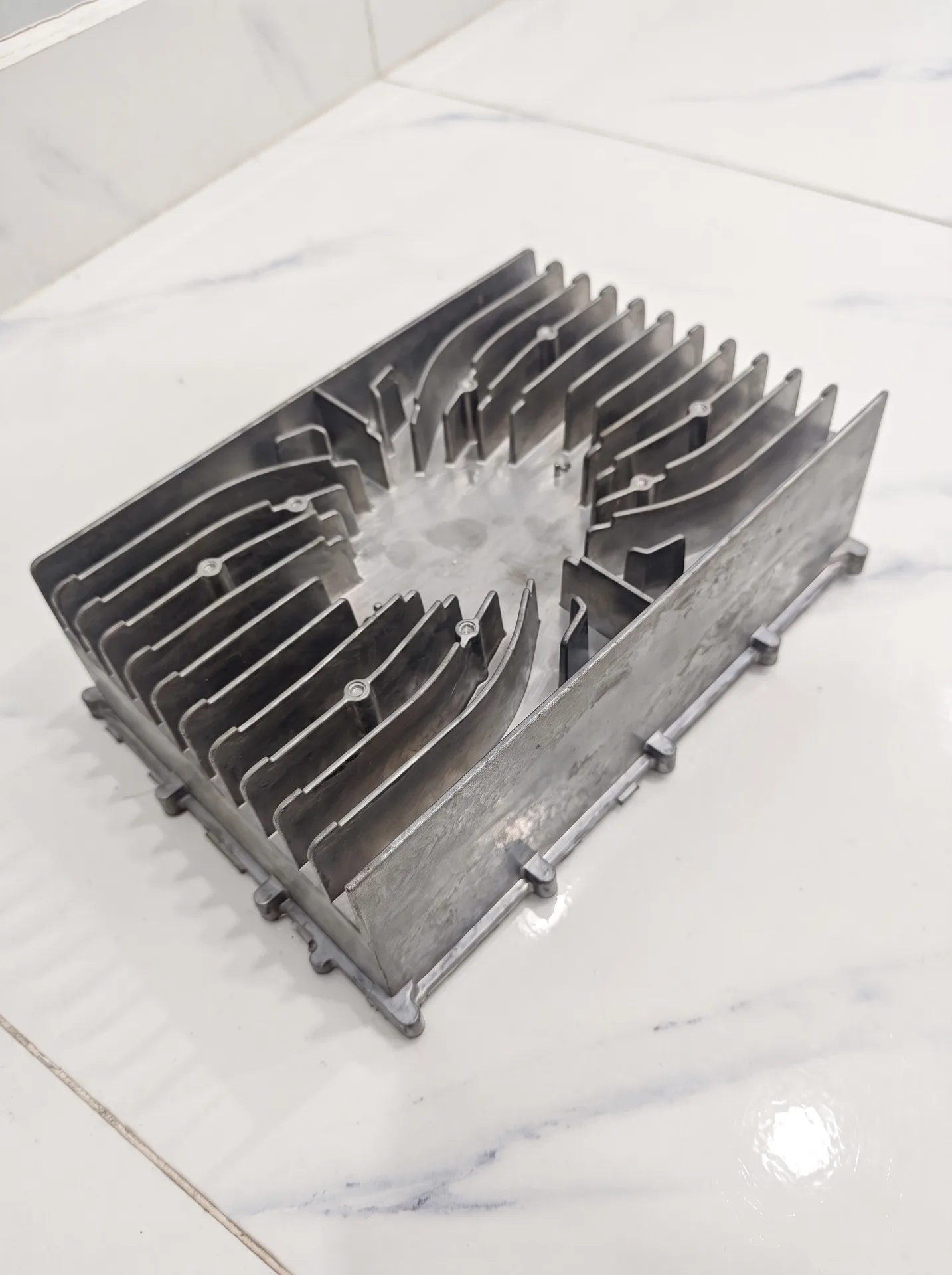
Here is a real quoted program for an aluminum die-cast base with 25 drilled and tapped holes, as published on the factory page. Every step from the die to the carton sits on one purchase order with one supplier.
The customer and the drawing stay under NDA, but the plan that went back with the quote is public on the factory page, section 05:
- Die cast. ADC12 aluminum from a two-cavity tool, two parts per shot, with the parting line and ejector positions agreed with the buyer before any steel is cut.
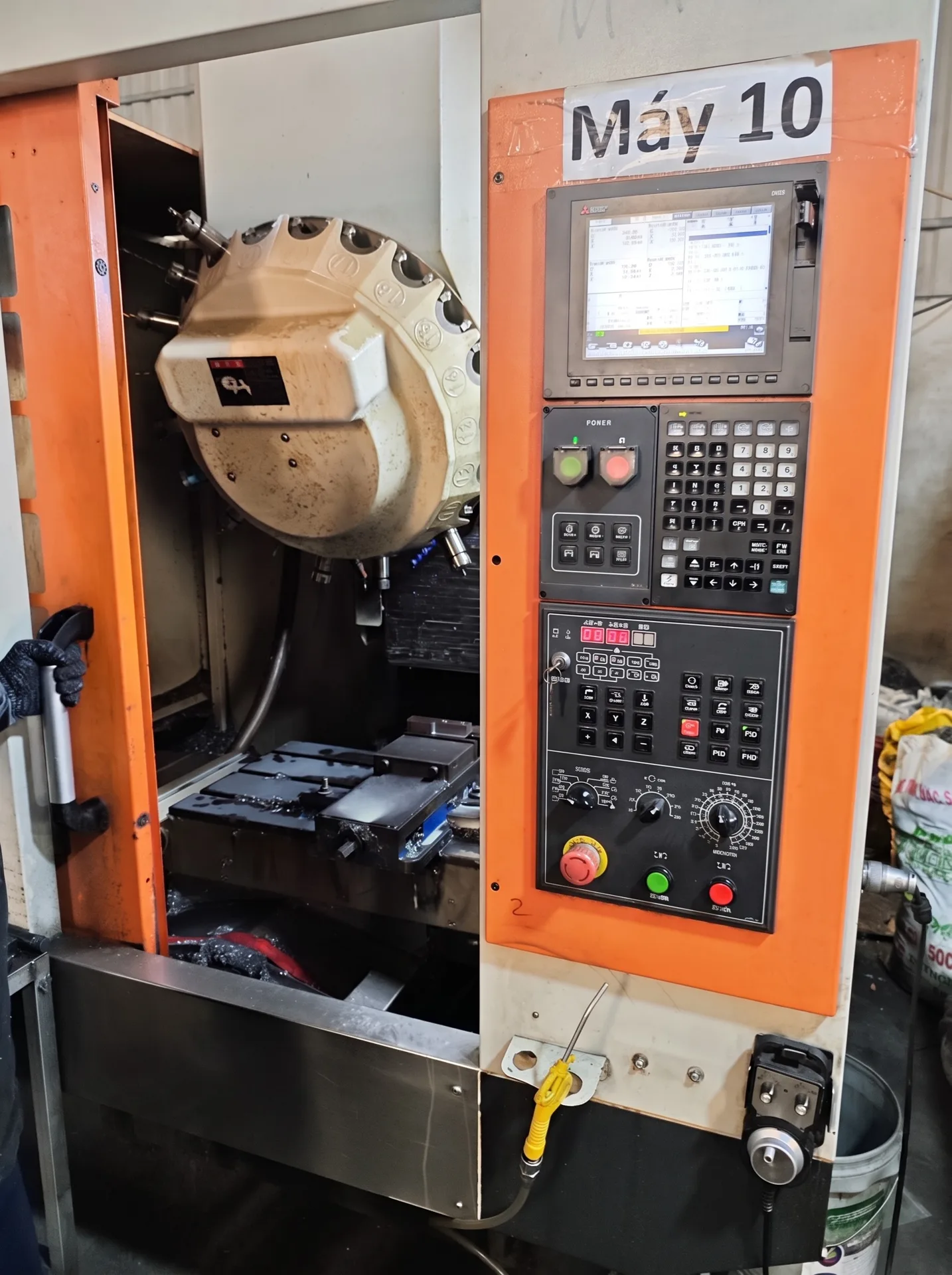
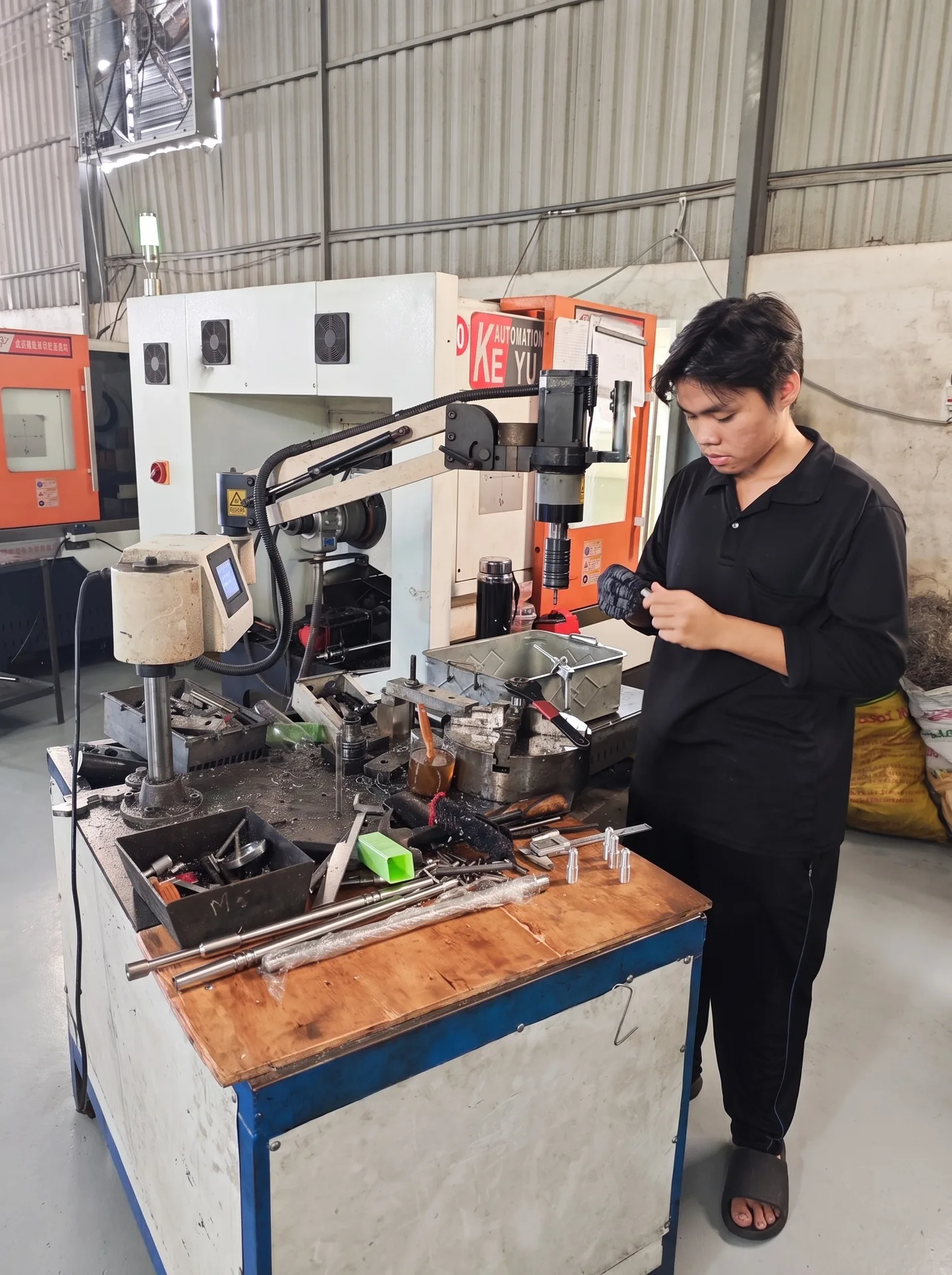
- Drill and tap. All 25 holes per part on four dedicated CNC fixture sets, two parts per fixture.
- Deburr. Casting flash and drill burrs removed by hand at the bench.
- Magnetic finish. The whole part tumbled in a magnetic finisher, which reaches burrs inside small holes that a hand tool cannot.
- Clean and dry. Ultrasonic wash, then oven drying, so no chips or coolant travel in the carton.
- Pack. Bagged one by one, six to a layer and ten layers to a carton.
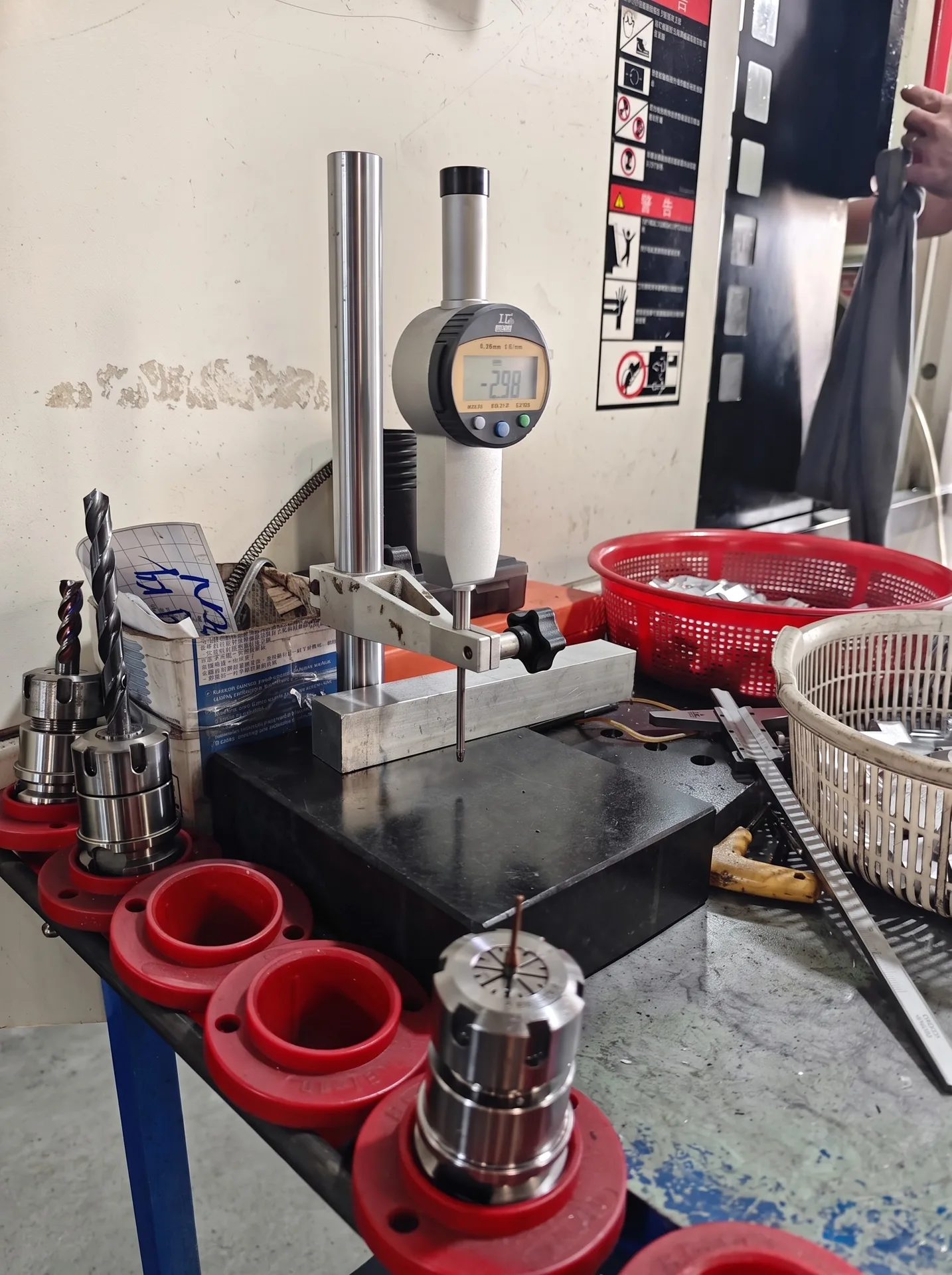
The inspection plan was written before the first shot. It covers fourteen features, split by where the risk sits. Everything is checked on the first article. Drilled holes are then checked on every part with go/no-go pin gauges and calipers, because a drill can wander on any cycle. Cast heights, flatness, bosses and tapped-hole run-in are checked every two hours, because cast features move only as the tool wears. The tolerance for each feature is listed in the table on the factory page.
The same pattern appears in two published industry routings. A meter housing for gas and water distribution is cast in ADC12, machined on its gasket face, cable-entry bores and tapped bosses, deburred, coated and pad-printed, then checked for flatness and threads before packing. An equipment housing for medical, dental and veterinary equipment has its parting line ground flush before it reaches the coating line, then gets powder coat matched to an approved sample. Both routings sit with one supplier, so the caster and the coater cannot point at each other.
What can one managing supplier do that a three-vendor chain cannot?
It can own the handoffs: one datum scheme, one inspection plan and one party answering for the finished part. Each point below links to the page where it is published, so you can check it rather than take it on trust.
- Processes labeled honestly. CNC turning and milling run at the lead CNC plant; die casting, stamping, surface finishing and the other processes go through partner plants Saola manages (factory page, sections 02 and 03).
- One routing, one part number, one invoice. Die cast, machine, deburr and polish, coat and mark, inspect and pack (home page, section 01).
- Machining set up as the second operation. Many milling jobs start as a casting from a partner foundry Saola manages, and the milling page asks for one datum scheme across the casting and machining drawings (CNC milling, sections 01 and 03).
- Parting line dressed before coating. The parting line is ground flush and edges are deburred before anything reaches the coating line (medical, dental and veterinary, section 04).
- Inspection planned by risk before the first shot. Drilled holes on every part, cast features on a timed interval, all features on the first article.
- A fixed finish menu. Eight finishes, applied by partner plants Saola manages to cast, machined and stamped parts, with threads and press-fit bores masked when the drawing calls them out (surface finishing).
- Known risks written down for buyers. Porosity after machining, threads that bind after coating (threads after anodizing or plating) and outgassing under powder coat (powder coating die-cast aluminum).
- Cosmetics judged against your sample. Parts are finished to the boundary sample, written specification or marked-up photos you supply, and powder coat is checked batch to batch against the approved sample (quality and inspection, section 04).
- One document set per part. First-article report, a dimensional record with each lot, a routing sheet on request and a Certificate of Origin (Form B) per shipment (quality and inspection, section 01).
How do one supplier and three vendors compare, row by row?
The table compares the structure of the two methods, not the performance of any named company. Where a value is not published, the cell says so instead of estimating it.
| Dimension | Foundry + machine shop + finisher | Saola, one supplier | Where to check |
|---|---|---|---|
| Purchase orders per part | One per vendor, three in all | One | Home page, section 01 |
| Freight between operations | A leg between each pair of vendors | Arranged by Saola between its partner plants; the buyer does not book it | Home page, section 01 |
| Datum scheme | Casting and machining drawings may reference different datums, forcing an extra fixture | One scheme across both drawings | CNC milling, tip 1; datums guide |
| Accountability for a failed coated or machined face | Split across three companies | One supplier for the finished part | Medical, dental and veterinary, section 04 |
| Inspection standard | Each vendor’s own | One plan written before the first shot | Factory page, section 05 |
| Alloys | Depends on the foundry | ADC12 aluminum and Zamak 3 zinc die cast, and brass and bronze bodies sand cast, by partner foundries Saola manages | Die casting; factory page, section 03 |
| Machining scope | Whatever the chosen machine shop runs, including billet work or five-axis if it offers them | Secondary machining of castings; no simultaneous five-axis, not a billet-machining shop | CNC milling, section 04 |
| Finishes | Depends on the finisher | Eight on a fixed menu, nothing outside it | Surface finishing |
| Salt-spray rating | Not published here | No rating published; test standard and duration set per part in the written quote | Surface finishing |
| Country of origin | If steps run in different countries, origin turns on substantial transformation | Production site for each step and country of origin stated on the quote | 19 CFR 134.1; quality and inspection, section 01 |
| Total cost vs three vendors | Not published | Not published; no saving is claimed, set per part in the written quote | Deliberately left open |
Two rows are deliberately empty of numbers. A salt-spray duration means nothing without the test standard, the finish and the part, and a cost comparison needs your current invoices next to a written quote on the same drawing.
Where does the one-supplier claim stop?
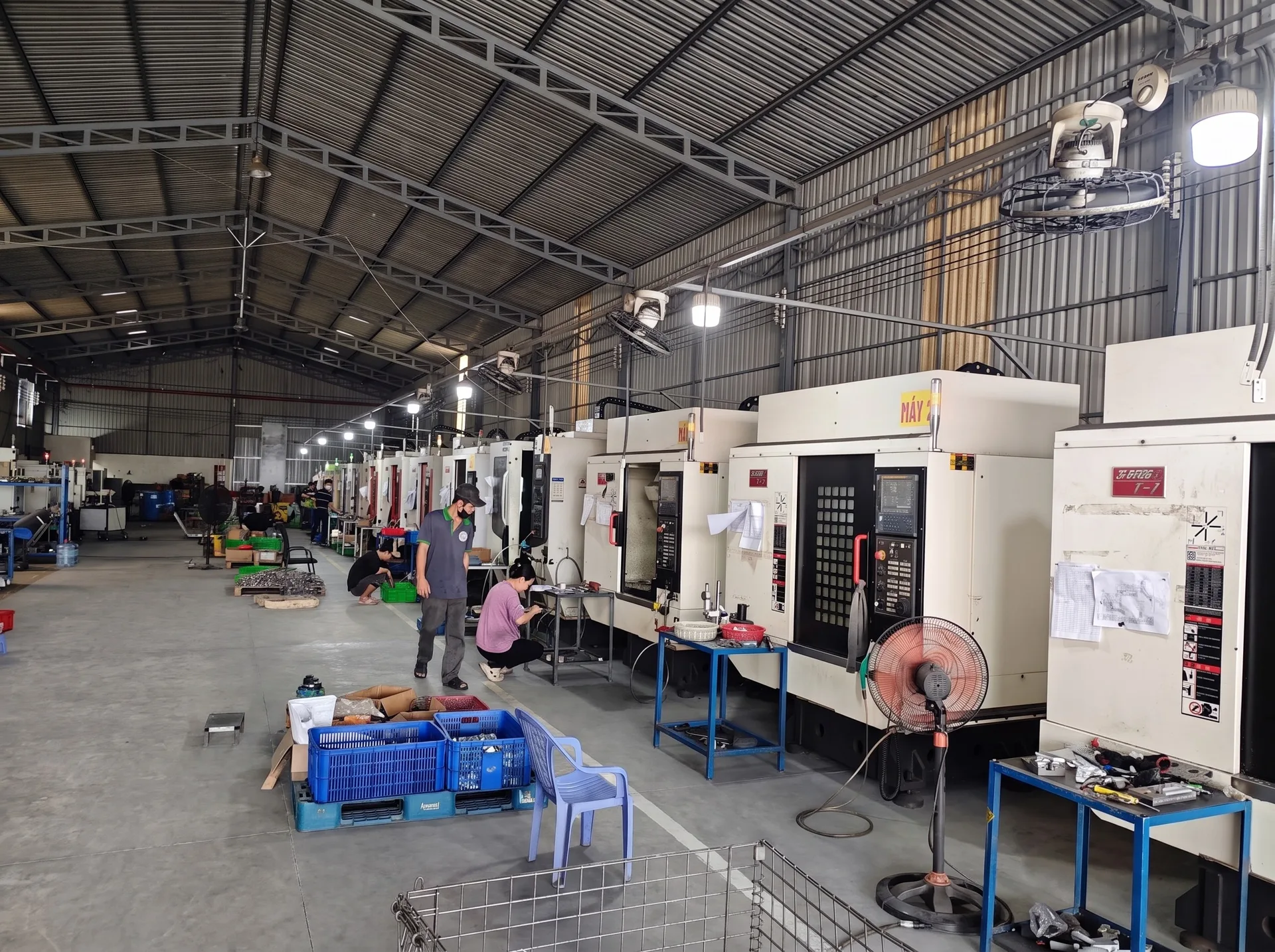
The one-supplier claim covers the purchase order, the drawings and the answer for the finished part. Only CNC turning and milling run at Saola's lead CNC plant; die casting, stamping and finishing are done by partner plants Saola manages, and the managed label is part of the point.
Brass and bronze bodies, such as valve bodies, are sand cast by a partner foundry that Saola manages. The pattern, the drawing and the purchase order stay with Saola. After the pour, the machining and thread gauging happen at Saola's lead CNC plant, and that part of the routing is managed the same way as described above.
Five more processes are also managed: aluminum extrusion, plastic injection molding, sheet metal and laser cutting, waterjet cutting and rotational molding. Each is placed with a partner, and the site says so on every card.
A few things are not published at all and are set per part in the written quote: tooling cost, order-quantity terms and salt-spray duration. If any of those is a hard requirement for your approval, raise it before the drawing goes out.
Does it matter for country of origin where each step happens?
Yes, for goods entering the United States. Under 19 CFR 134.1, the country of origin is the country of manufacture, and further work in another country changes it only if that work effects a substantial transformation.
The regulation’s wording is short (19 CFR 134.1, eCFR), but applying it to a casting poured in one country and machined in another is a case-by-case question. If your three-vendor chain crosses a border, ask your customs broker how the substantial-transformation test applies to your part before you build a duty rate into your cost. When casting, machining and finishing happen at different plants, the quote names each site and the country of origin, so you can see whether a border sits between those operations. The raw material is a separate question: its source and the transformation are documented per part number, as set out on the tariffs and origin page.
The quote names the production site for each step and the country of origin; a part of Vietnam origin ships with a Certificate of Origin (Form B). Duty rates depend on your HTS code, so check them against your own classification.
Frequently asked
Is one supplier always cheaper than three?
Not necessarily, and this page does not claim it. Compare your current three invoices plus freight between vendors with one written quote on the same drawing and the same volume.
Can Saola machine castings poured by another foundry?
Usually, if the incoming castings pass inspection for wall thickness and porosity. Send the drawing and a sample casting and the machining step can be quoted on its own.
Which processes run at Saola's lead CNC plant?
CNC turning and milling, plus welding, EDM and polishing. Die casting, stamping, surface finishing and the other processes are done by partner plants Saola manages, and the quote names where each step is done.
What documents come with a part?
A first-article inspection report, a dimensional record with each lot and a Certificate of Origin (Form B) per shipment, with the routing sheet, RoHS declaration and material certification on request.
What happens if a first-article measurement is out of tolerance?
Work stops and you are told before a sample ships, with the measured value against your print and a proposed fix.
Sources
- 19 CFR 134.1, Definitions (country of origin), Electronic Code of Federal Regulations, accessed September 2026
- Secondary Processing Costs, NADCA Design, North American Die Casting Association, accessed September 2026
- The factory, section 05 (die-cast base program and inspection plan), Saola Manufacturing, September 2026
- Quality and inspection, sections 01 and 04, Saola Manufacturing, September 2026