
Production CNC machining · Binh Duong, Vietnam
Production CNC machining in Vietnam, for parts you reorder.
This page is for buyers who order the same machined part again and again. It runs from your drawing on the machining centers and CNC lathes at our lead CNC plant, in lots of thousands, with the first article measured before the run and a record per lot on request. It is not a prototype service.
- Machines
- 21
- 12 machining centers and 9 CNC lathes at our lead plant
- Parts a year
- 1,000s+
- From a few thousand into the hundreds of thousands
- Steps
- 6
- Drawing review to production, each ending in a written record on request
For buyers · Read this first
Production CNC machining: what we take, and who to call for the rest.
Looking for a production CNC machining supplier in Vietnam? This is the short version, and it is what the written quote will say.
We take
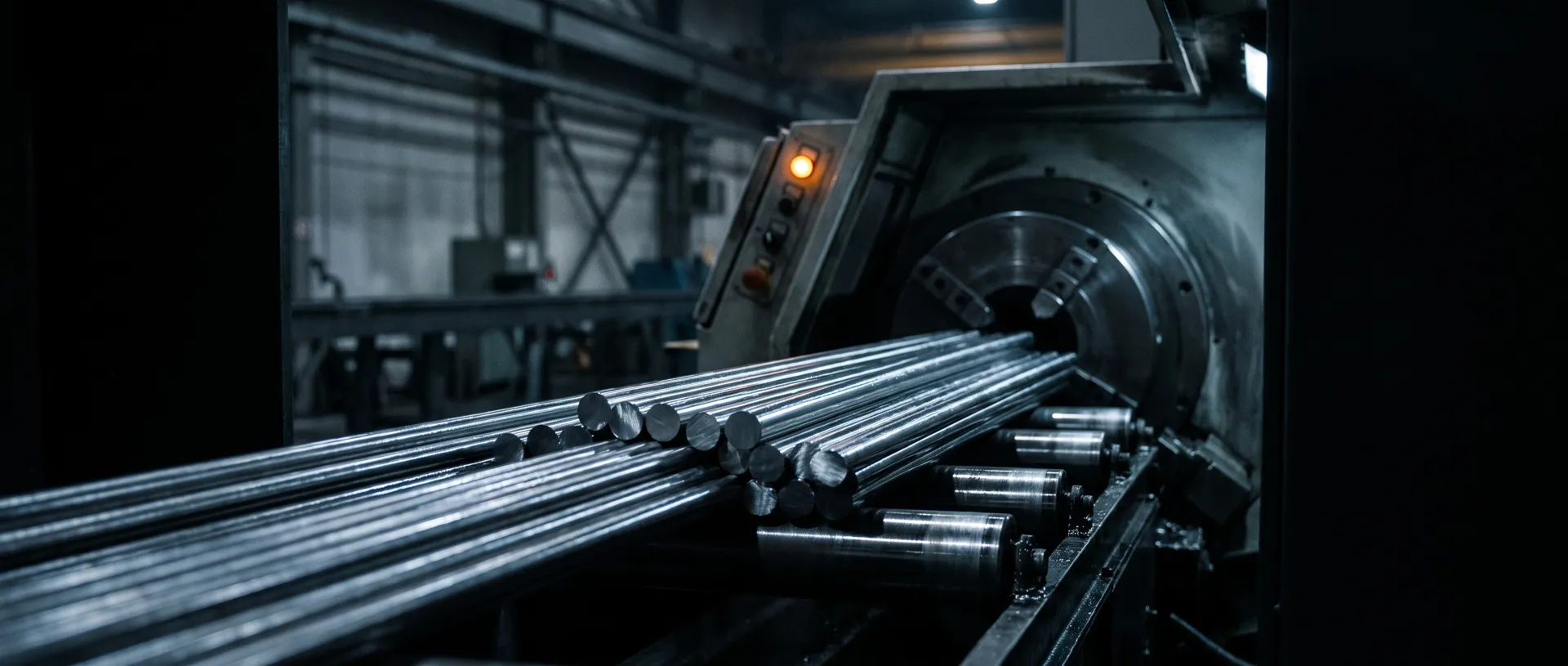
Recurring production parts from a drawing, at annual volumes from a few thousand into the hundreds of thousands. Turned bar and tube parts roughly 40 mm in diameter and under, in steel 52100, C1117 and 12L14, aluminum 2011-T3 and 6061-T6 and silicon bronze, with ASTM A513 DOM tube for hollow parts. Milled and tapped parts, on die-cast ADC12 aluminum and Zamak 3 zinc castings or sand-cast brass and bronze. We also machine parts directly from bar stock and plate, with no casting step required.
All of it runs on 12 machining centers and 9 CNC lathes at our own lead CNC plant. ANPT and NPT threads to ANSI/ASME B1.20.1 are gauge-checked; 125 RMS as machined. Send a STEP file or a PDF drawing; the quote names the production site and country of origin.
We send elsewhere
Prototypes and one-offs: we are not a prototype shop, and a prototype shop is the better fit. Simultaneous five-axis work: not offered; see what five-axis machining means for your part. Swiss-type and live-tooling work: we run conventional CNC lathes with no live tooling; cross holes and flats move to a machining center at the same plant, on one PO.
Volumes too low for setup to amortize: minimum order is set per part in the written quote, and we say so up front.
Moving a running part to a new supplier? Read how to prepare a machining RFQ, how to vet a CNC machining supplier in Vietnam and make or buy for machined parts.
01 — How a production order runs
From drawing to a repeat order, in six written steps.
Nothing moves forward on a verbal okay. The same six steps are laid out on the quality page.
-
Drawing review
We read every tolerance, callout and note, and you receive a marked-up copy of your own drawing.
-
DFM feedback
Notes on where a small design change lowers cost or risk, as a short written list.
-
Tooling
Tooling or fixtures are built and dimensioned to your drawing. A tooling report is available on request.
-
First article
The first piece is measured against every toleranced dimension. The report is available on request.
-
Sample approval
You review the first article and sign off before the production run starts.
-
Production
We run to the routing verified at first article. You receive a dimensional record per lot on request.
02 — What you can plan around
The production set-up, in one table.
If your drawing needs something that is not in this table, say so before tooling, not after first samples.
| Parameter | Specification |
|---|---|
| Machines at the lead CNC plant | 12 machining centers and 9 CNC lathes, with EDM, welding and polishing alongside |
| Volumes we are set up for | Recurring production parts, from a few thousand into the hundreds of thousands a year; not a prototype shop |
| Turned parts | Bar and tube roughly 40 mm in diameter and under: steel 52100, C1117, 12L14 · aluminum 2011-T3, 6061-T6 · silicon bronze · Brass, confirmed against your drawing · ASTM A513 DOM tube |
| Milled parts | Datum faces, bores, pockets and tapped holes on die-cast ADC12 aluminum, Zamak 3 zinc and sand-cast brass and bronze |
| Thread standard | ANPT and NPT to ANSI/ASME B1.20.1, gauge-checked |
| Surface finish, as-machined | 125 RMS |
| Tolerances | Confirmed against your drawing in the written quote; see precision CNC machining for how tolerance is quoted by tier |
| Not offered | Simultaneous five-axis machining · Swiss-type turning · live tooling on the lathes · prototypes |
| Inspection records | A first-article report against every toleranced dimension and a dimensional record per lot, available on request |
| Where each step is done | Machining and inspection at our lead CNC plant · castings from partner foundries · finishing at partner plants; the quote names the production site and origin |
03 — Cost at volume
What to put in the RFQ so the unit price is honest.
At production volume the price per part is mostly set before the first chip: how setup is spread, which tolerances are real, and how the part is held.
1. Give the annual volume and the release pattern
Setup and gauging are paid once per run, so the unit price depends on how many parts each run makes. Tell us the yearly volume and how often you reorder; how setup cost per part falls with batch size shows the effect.
2. Call out the tight tolerance only where the part needs it
Every toleranced dimension is measured at first article, so each one is a cost. Keep the tight call-outs for the fits that matter; what drives CNC machining cost lists the common ones.
3. Say which features move to a second operation
Cross holes, flats and tapped features on a turned part are done on a machining center in a second operation. Showing them on the drawing lets us quote one routing on one PO. See design for machining for the features that quietly add cost.
4. Ask for the production site and origin by step
A part that is cast, machined and finished in different places can have a different origin at each step. Every quote states it; country of origin for cast and machined parts explains why it matters at the border.
04 — Where this is the wrong fit
When a different supplier is the better call.
Prototypes, one-offs and five-axis parts
We are set up for parts you reorder, not for one-off prototypes, and we do not offer simultaneous five-axis machining. If either describes your part, we will say so on the first reply rather than after tooling is committed.
05 — One supplier, one PO
The detail behind each part family.
Production runs are turned, milled or both, and many ship finished. The process pages carry the specifications.
CNC turning
Bar and tube parts in volume, threads gauge-checked, knurling, second-operation milling at the same plant.
See CNC turningCNC milling
Datum faces, bores and tapped holes on die-cast and sand-cast parts, machined to print at our lead CNC plant.
See CNC millingSurface finishing
Plating, anodizing, coating and rust protection after machining, done at partner plants on the same PO.
See the finish menu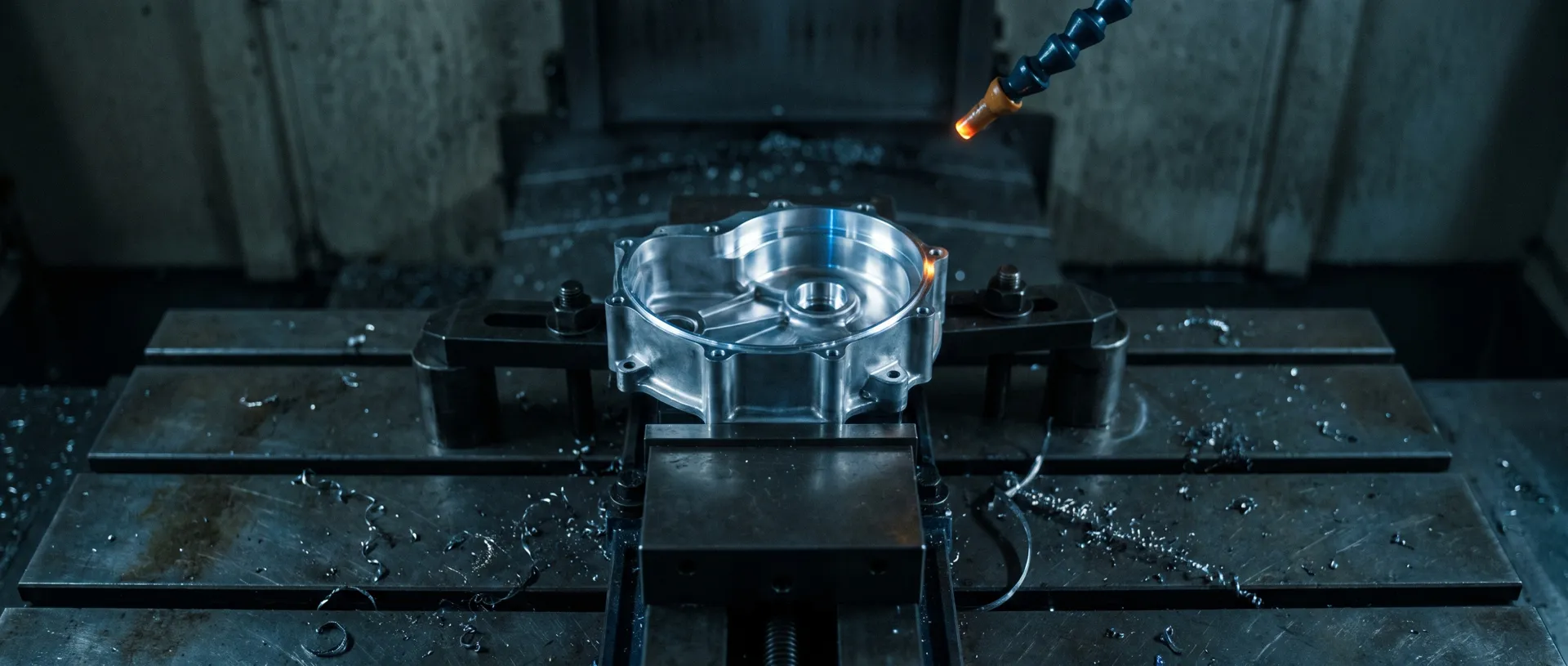
What does production CNC machining mean here?
Recurring parts made from your drawing, ordered again and again at annual volumes from a few thousand into the hundreds of thousands, on 12 machining centers and 9 CNC lathes at our own lead CNC plant in Vietnam. The first article is measured against every toleranced dimension, and a dimensional record is available per lot on request.
What annual volumes is this for?
From a few thousand into the hundreds of thousands of parts a year, from the same drawing. Minimum order is set per part in the written quote, and we say so when your volume is too low for setup and gauging to amortize.
Do you take prototypes or one-off parts?
No. We are not a prototype shop, and a prototype shop is the better fit for one-offs. Production runs follow an approved first article.
Do you offer five-axis, Swiss-type or live-tooling work?
No simultaneous five-axis machining, and no Swiss-type work: we run conventional CNC lathes. Our lathes have no live tooling, so cross holes and flats move to a machining center at the same plant as a second operation, on one PO.
Who makes the parts, and which country of origin is on the quote?
Machining and inspection are done at our own lead CNC plant in Vietnam. Castings, finishing and other processes go to partner plants we manage, and every quote names the production site and the country of origin for each step.
What do you need to quote a production part?
A STEP file or a PDF drawing, the material, the finish and the annual volume you expect. The written quote gives a unit price at your volume, names the production site and the country of origin, and notes anything in the drawing we would change to take cost out.
Send the drawing and the yearly volume.
STEP or PDF. You get a unit price at your volume and a short note on anything in the drawing we would change to take cost out.