
Guide
When is PVD coating worth it on a machined part?
PVD coating is a thin, hard ceramic or metallic film, such as titanium nitride (TiN) or chromium nitride (CrN), deposited from a vapor in a vacuum chamber onto a finished part. Short answer: it is worth it on a machined part when a hardened or heat-stable surface needs more wear resistance or lower friction without changing its size, and it is a poor choice when the part cannot take the coating temperature or needs corrosion protection on its own.
By Saola Manufacturing engineering team · Published · Updated
Most search results for PVD are about watches, faucets and jewelry. This guide is for engineers with a drawing: what TiN, CrN and black PVD do on a functional part, how thick they are, which substrates survive the process, what happens to fits and threads, and how to write the callout and accept the parts. Dark finishes on stainless sporting parts are compared in the PVD vs black oxide guide; this page covers PVD as an engineering coating.
On this page
What does PVD coating actually do on a functional part?
It adds a very hard, thin skin that resists abrasive and adhesive wear and, for some coatings, lowers friction against steel. It does not add strength to the part, and it does not replace a corrosion-resistant base metal.
Physical vapor deposition covers several processes, mainly arc evaporation and sputtering, that turn a solid target such as titanium or chromium into vapor and react it with nitrogen or carbon gas so it condenses on the part as a nitride or carbide. The result is a film measured in microns. Coating makers position it for cutting tools, forming tools and sliding components: the coating maker Oerlikon Balzers describes its CrN coating for high-temperature, high-wear uses such as piston rings and its TiN coating for wear protection and color coding in its general engineering brochure.
The film is only as good as what is under it. A thin hard layer on a soft substrate cracks when the substrate yields under load, the so-called eggshell effect, which is why functional PVD is usually applied to hardened tool steel, bearing steel, hardened stainless or carbide rather than to soft annealed steel or aluminum.
How thick is PVD coating, and how hot does the process get?
Typical functional PVD films are a few microns thick, and coating temperatures run from under a few hundred degrees Celsius up to around five hundred, depending on the coating. Check both numbers against your part before choosing a coating.
The figures below come from one coating maker's published data; other coaters publish similar ranges for the same chemistries, but use your own coater's datasheet for the drawing. Hardness is given as indentation hardness in gigapascals, not as Rockwell or Vickers, so do not compare it directly with the hardness of the base steel.
Two numbers matter most to the drawing. Thickness decides the size change, and the coating temperature decides which substrates survive. A hardened steel that was tempered at a temperature lower than the coating temperature can lose hardness in the chamber, so ask the coater to confirm the process temperature against your heat-treat record, or choose a low-temperature coating.
| Coating (maker's name) | Typical thickness (µm) | Hardness HIT (GPa) | Coating temperature (°C) | Max. service temperature (°C) |
|---|---|---|---|---|
| TiN, gold (BALINIT A) | 1-4 | 27-33 | 250 / 400 | 600 |
| CrN, silver-gray, arc (BALINIT D) | 2-4 | 15-21 | 200-450 | 700 |
| CrN, sputtered (BALINIT CNI) | 1-20 | 15-21 | below 250 | 700 |
| TiAlN, arc | 3-4 | 30-36 | 200-450 | 900 |
| WC/C carbon-based (BALINIT C) | 1-4 | 8-15 | below 250 | 300 |
| a-C:H DLC, PACVD (BALINIT DLC) | 1-3 | about 15-25 | below 250 | 300 |
Which materials and parts can take a PVD coating?
Hardened tool steels, hardened stainless steels, bearing steels and carbide are the classic substrates, because they can take the heat and support the thin film. Low-temperature processes widen the list, but aluminum, zinc die castings and brass need a coater's confirmation part by part.
Three questions decide whether a part is a candidate. First, temperature: the substrate's tempering or aging temperature must sit above the coating temperature, or the part loses hardness or distorts. Second, support: the base must be hard enough not to dent under the film. Third, cleanliness and outgassing: porous castings and leaded free-machining alloys can release gas or contaminants in the vacuum chamber and spoil adhesion, so they are a poor starting point.
Geometry is the fourth question. PVD deposits mainly on surfaces that face the source, so outside diameters and flat faces coat evenly while deep bores, blind holes and narrow slots coat thin or not at all. Fixturing points also stay bare; agree with the coater where the part is held, and mark those areas on the drawing as non-significant.
What does a few microns of PVD do to fits, threads and surface finish?
Each coated surface grows by the film thickness, so a diameter grows by roughly twice the film, which typically matters only on close fits, gauged threads and ground bearing seats. The coating copies the surface beneath it, so it will not hide tool marks or improve roughness.
On most machined features a growth of a few microns is inside the tolerance. It is not inside the tolerance on a ground pin with a sliding fit, a gauged thread class, or a bore held to a few microns. For those features, either machine to a pre-coat size, mask the feature, or state that the dimension applies after coating. The thread gauge question is the one most often missed: a coated external thread may no longer enter a go ring gauge that it passed before coating.
Surface finish works the other way. Because the film follows the substrate, a turned or milled surface stays visibly turned or milled after coating, and any burr or edge left from machining is coated too. If the coated face needs a fine finish or a polished look, finish the part first; PVD will not do the polishing for you. See surface finish before or after coating for how to write that sequence.
How do you call out PVD coating on a drawing and in the RFQ?
Name the coating chemistry and color, the thickness range, the significant surfaces and masked areas, the substrate and its hardness, and the acceptance tests. There is no single universal PVD specification, so the note has to carry this information itself.
A workable drawing note reads like this: "PVD CrN, 2 to 4 µm on surfaces marked S; no coating on threads marked M; substrate 440C hardened and tempered, tempering temperature on heat-treat cert; dimensions apply before coating unless noted; thickness by crater grinding per EN ISO 26423 on a witness coupon in each batch; adhesion by the coater's standard indentation test, report attached." Adapt the numbers to your coater's data; the structure is what matters.
The RFQ should add the batch size, the part's mass and maximum dimensions (coating chambers have size limits), any food-contact or medical requirement, and the appearance standard for color. If color matching between batches matters, send an approved sample and say so, because color varies with thickness and process.
How do you inspect PVD coating on received parts?
Check thickness on a witness coupon or a sacrificial part, adhesion by the agreed test, and appearance against the approved sample. Coating thickness at the micron level is not measured on the part with a caliper or a height gauge.
Crater grinding, also called ball cratering or calotte grinding, is the usual thickness check: a rotating ball grinds a shallow spherical crater through the coating, and the thickness is calculated from the crater rings. Fraunhofer IST describes the method as suitable for coatings of at least one micron, with an accuracy of about a tenth of a micron depending on the surface, under DIN EN 1071-6 and EN ISO 26423. Because it leaves a crater, run it on a coupon coated in the same batch, not on a finished functional face.
Adhesion is usually checked by an indentation test, in which a hardness indenter is pressed into the coated surface and the cracking or flaking around the dent is compared with reference images. Agree the test, the pass level and who keeps the record before the first batch. On receiving inspection, gauge the threads and fits that the coating could have moved, and look for bare spots on significant surfaces.
Can Saola supply machined parts with PVD coating?
PVD coating is not on the current finish menu, so it has to be raised at drawing review before an order. The machining of the substrate part is what the lead CNC plant does.
Finishing at Saola is a managed process carried out at partner plants against a fixed menu of eight finishes listed on the surface finishing page: electroplating, gold plating, zinc plating, RoHS blue trivalent chromate, oil-dip rust protection, anodizing on aluminum, powder coating and pad printing. PVD is not one of them. If your part needs TiN, CrN or a black PVD film, send the drawing with the coating note and say whether you have your own approved coater; the answer on the coating route comes at drawing review. The turned or milled substrate is the in-house part of the job: the CNC turning page lists the bar materials run at the lead CNC plant, including 52100 bearing steel. Send drawings through the quote form.
Frequently asked
Is PVD coating the same as plating?
No. Plating deposits metal from a liquid bath, usually with current; PVD condenses a ceramic or metal film from vapor in a vacuum. PVD films are much thinner and harder than most plated layers.
Does PVD coating stop stainless steel or tool steel from rusting?
Not on its own. The film is thin and can have pinholes, so corrosion resistance comes mainly from the base metal. Treat PVD as a wear and friction coating, and pick a corrosion-resistant substrate if the part is exposed.
Can aluminum parts be PVD coated?
Some can, with low-temperature processes, but aluminum is soft and the thin film needs support. Ask a coater for a trial on your alloy before you put PVD on an aluminum drawing.
Can a worn PVD coating be stripped and reapplied?
Often yes on steel and carbide, since many coaters strip and recoat tools. Each strip and recoat can change the surface and edges slightly, so check critical sizes after recoating.
What color is TiN, CrN or black PVD?
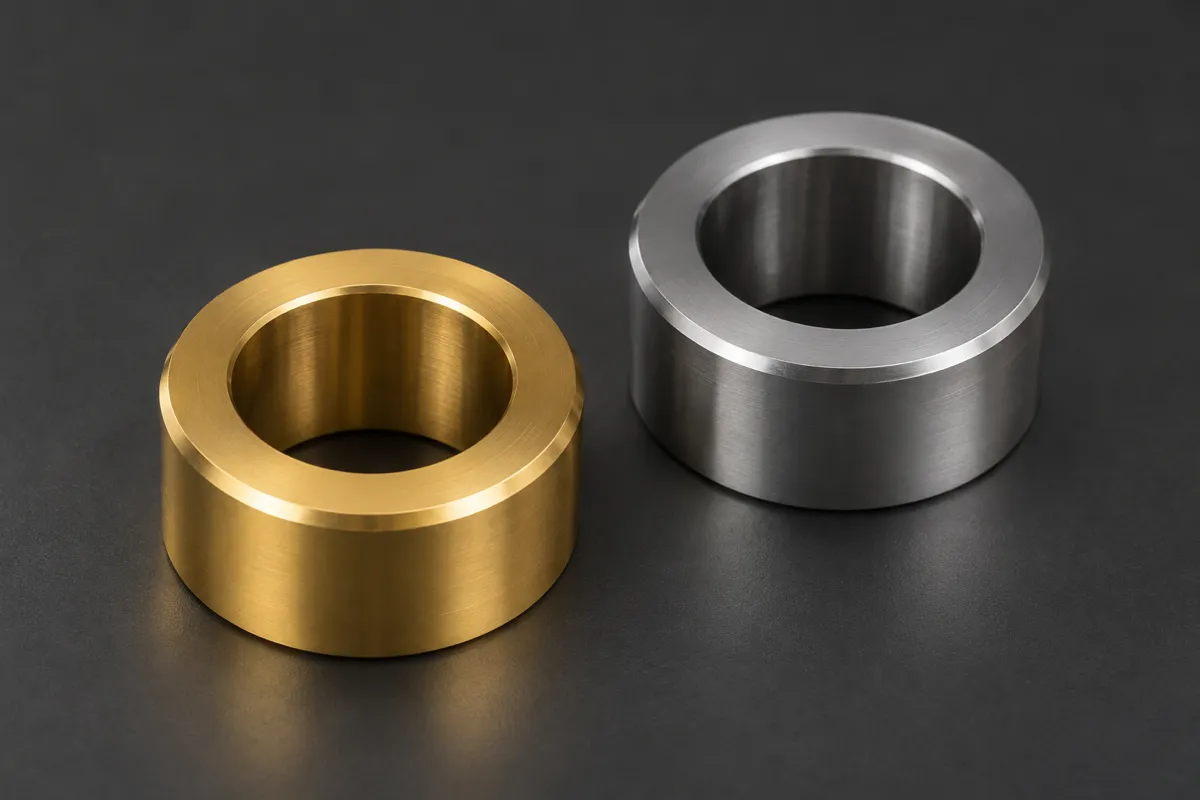
TiN is gold-yellow and CrN is silver-gray. Black PVD is usually a carbon-based or specially tuned film; the shade depends on the process, so approve a sample.
Sources
- General Engineering: PVD coating solutions for high-performance precision components (HQ205EN), Oerlikon Balzers, 2019
- BALINIT D (CrN) coating properties, hardness per ISO 14577, Oerlikon Balzers, accessed November 2026
- BALINIT A (TiN) coating properties, Oerlikon Balzers, accessed November 2026
- Crater grinding method (DIN EN 1071-6, EN ISO 26423), Fraunhofer Institute for Surface Engineering and Thin Films IST, accessed November 2026