Metal stamping · Binh Duong, Vietnam
Blanked, formed and pierced on dies we build ourselves.
Brackets, washers, clips and plates cut from strip and sheet on progressive and compound dies designed and built in-house. Because we own the tooling, a die change or a running fix does not wait on a subcontractor's schedule.
- Hours
- 48
- Quote returned from your drawing
- Dollars
- 950–12.8K
- Die tooling investment range
- Pieces
- 5K–30K
- MOQ, depending on part family
- Die types
- 2
- Progressive and compound, built in-house
01 — What we actually run
Flat and formed parts, made fast, made flat.
Stamping is the right process when a part is thin, repeatable and made in real volume. If your part needs a deep draw or comes off heavy plate, tell us — that is better suited to a managed laser or waterjet partner than to our die shop.
Typical parts
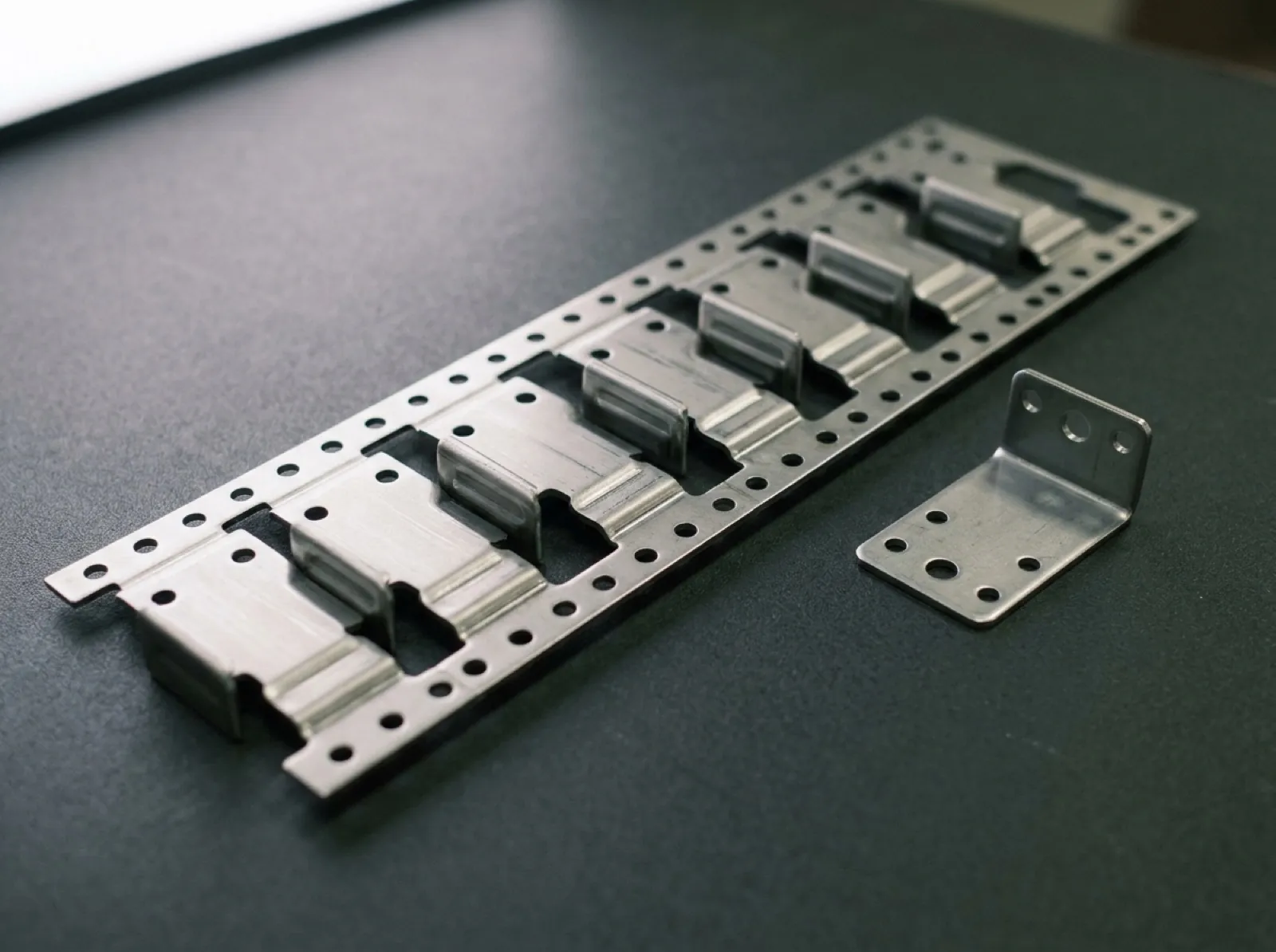
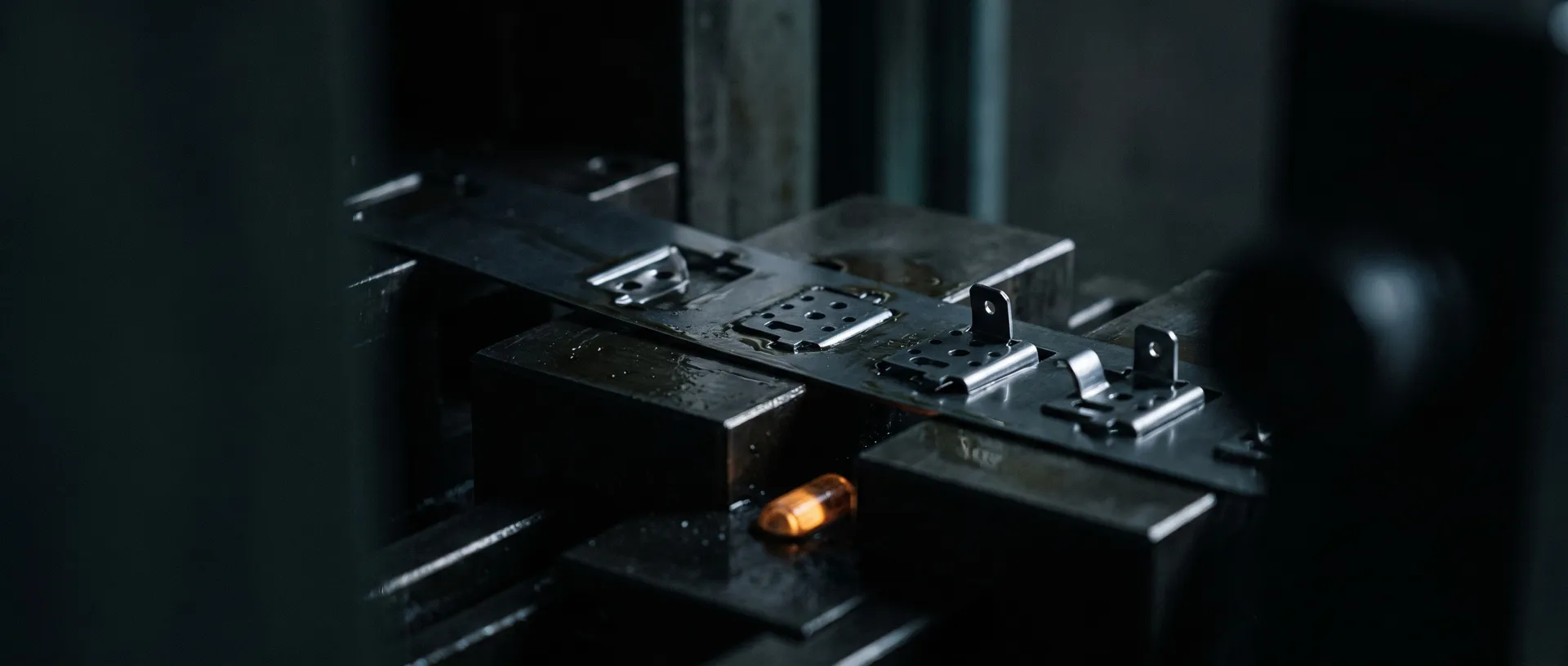
Brackets, washers, clips and mounting plates. Progressive dies run a family of parts through blanking, piercing and forming stations in a single strip pass; compound dies cut and form a simpler flat part in one hit when the geometry allows.
We run brass strip and 6061-T6 aluminum sheet routinely, plus steel stampings specified to your drawing gauge and grade.
02 — Process parameters
Operations, tooling and materials.
What we build the die around, and what leaves the press.
| Parameter | Specification |
|---|---|
| Operations | Blanking, forming, piercing, coining |
| Tooling | Progressive and compound dies, designed and built in-house |
| Tooling investment | US$950–12,800, depending on station count and complexity |
| Minimum order quantity | 5,000–30,000 pieces, depending on part family |
| Materials run | Brass strip · 6061-T6 aluminum sheet · steel to drawing specification |
| Standard finishing after stamping | Deburred, oil-dip rust protection, zinc plating, RoHS-compliant blue trivalent chromate |
03 — Take cost out of the drawing
Where stamping cost actually comes from.
Die cost and running speed are set almost entirely by the layout you send us. These are the changes that matter most.
1. Keep hole-to-edge distance at or above the material thickness
A hole punched too close to an edge tears instead of shearing cleanly. Standard practice is to hold hole-to-edge and hole-to-hole spacing at least one material thickness — closer than that adds scrap and slows the die.
2. Radius internal corners instead of leaving them sharp
A sharp internal corner concentrates stress in both the part and the punch. A generous radius extends die life and reduces the risk of a cracked part in the field.
3. Standardize hole sizes across a part family
If three parts in a family each use a slightly different hole diameter, that is three punches instead of one shared punch. Round to a common size wherever the assembly tolerance allows it.
4. Avoid tight flatness on a part that gets formed anyway
A flatness call-out on a part that already goes through a forming station is usually redundant — the forming operation sets the final shape. Save the tight flatness spec for parts that ship flat.
5. Hold one gauge across the family where you can
Every material thickness change is a material changeover on the press. A family that shares one gauge and one alloy runs back to back without a changeover between parts.
04 — Where this is the wrong process
What stamping does not do here.
Not for deep draws or heavy plate
Our dies are built for blanking, forming, piercing and coining on strip and sheet stock. A part that needs a deep-drawn shell or comes off heavy plate is a better fit for one of our managed laser-cutting or waterjet partners — ask us and we will route it correctly instead of forcing it onto a die it was never designed for.
Below roughly 2,000 pieces, and often higher for a multi-station progressive part, we are not competitive and will tell you so on the quote.
05 — One supplier, one line
A bracket rarely ships alone.
Stamped brackets on our floor are usually part of a larger assembly — paired with a cast housing or a turned fastener, finished and packed together.
Surface finishing
Deburred, oil-dipped or zinc plated straight off the press, on the same part number.
See the finish menuDie casting
A stamped mounting bracket paired with a die-cast housing, shipped as one assembly.
See die castingCNC turning
Turned pins, inserts or fasteners assembled with stamped parts before packing.
See CNC turning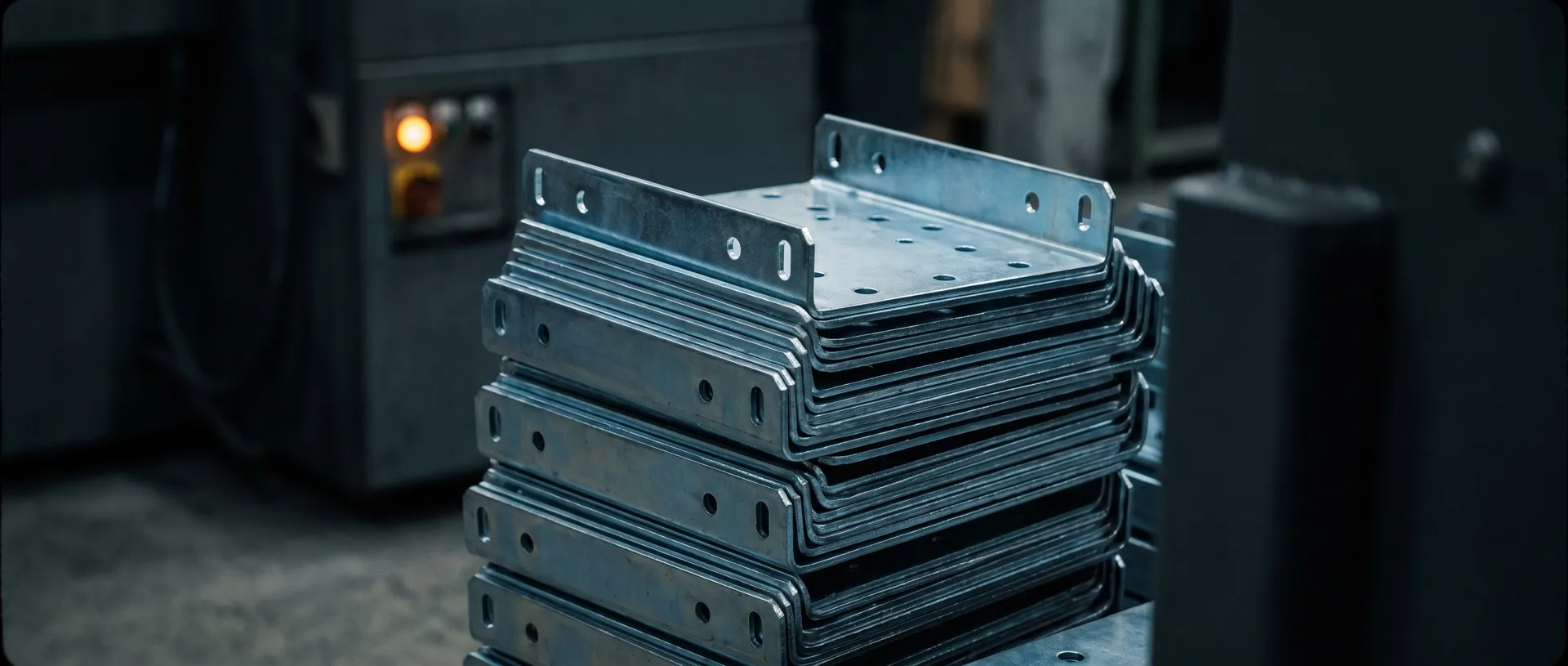
Progressive die or compound die — which do I need?
A compound die cuts and forms a simpler flat part in one station. A progressive die runs a strip through several stations — blank, pierce, form — for a part with more features. We will tell you which one your drawing calls for once we see it.
What materials can you stamp?
Brass strip and 6061-T6 aluminum sheet are what we run most often. For steel, tell us the grade and gauge on your drawing and we will confirm we can run it before quoting.
Can stamped parts be finished on the same order?
Yes. Deburring and oil-dip rust protection are standard after stamping, and zinc plating or RoHS-compliant blue trivalent chromate can be added on the same PO — see surface finishing.
Send a stamping drawing. See the die cost first.
STEP or PDF. You get the tooling investment, a unit price at your volume, the lead time, and a short note on anything we would change to take cost out.